
A new perpective for the future of humanity
Tommaso Carmenati | Caretaker at the Autosufficienza applied ecology centre
I have now been collaborating in various forms with the Autosufficienza applied ecology centre for four years.
What I have learnt during this period is not easy to express.
Encounters, direct experiences, reflections, mistakes. Moments dense with real life, the kind you don’t easily forget, and which will probably mark the rest of your existence.
There are also some concepts that have completely changed my mindset. Expressions and sayings that, with a sometimes disarming simplicity, have the power to completely modify your way of seeing reality.
I heard some time ago that in some traditional Central American peoples there is no term for “environment”. It may seem trivial, but from the moment the existence of a word is established, the concept that derives from it is also created.
Decreeing the existence of the word “environment” means affirming that there is something outside of me, a separate entity, and therefore I am not part of that “whole”. Thus what is outside of me I can exploit at will, leading to what are today the most relevant issues of the Anthropocene: global warming, environmental disasters and ecosystem crises in general.
I gave an example to highlight the power of words. In this regard, there is an expression that I heard for the first time here and which has profoundly marked my vision.
This is a phrase that appears in the charter of the “Custodi della Terra”, a group of friends working for the common good in the Savio valley, which reads: «We care for the Earth and sow to create abundance and balance for seven generations».
Acting with a seven-generation perspective: what does it mean?
It seems that the theme of the seven generations has its roots in some Native American tribes. The number seven is indicative and is due more to matters of symbolism and numerology.
Leaving aside the question of the number, the underlying concept is this: every time we make a choice or take an action, we should ask ourselves how that choice, as well as bringing us an immediate benefit, can have a positive impact on future generations.
Of course, at first glance it may seem like one of many theories that are difficult to put into practice. But if one were to think, for example, with a homoeopathic perspective – of almost imperceptible but constant changes – this concept could completely revolutionise our lives and consequently change the fate of the community.
It can be applied to every context of our daily life: communication, managing emotions, words, thoughts, but also purchasing food, clothes, furnishings and so on. It is a mindset not confined to any specific area.
The anthropologist Gregory Bateson, who coined the concept of “ecology of mind”, was among the first to investigate the relationship that exists between our “internal world” and the “external” one. How one influences the other. And this is precisely the perspective we should adopt: a perspective that looks at the relationship between the phenomena of a system and does not limit itself to analysing the individual.
Only by adopting this perspective, Bateson wrote, can one understand the interdependence that characterises living systems, managing to approach phenomena such as “the bilateral symmetry of an animal, the structured arrangement of leaves in a plant, the successive escalation of the arms race, courtship practices, the nature of play, the grammar of a sentence, the mystery of biological evolution, and the crisis in which the relationship between man and the environment finds itself today”.
One example above all: ancient grains for seven generations
At the Autosufficienza Applied Ecology Centre, in addition to the bio-intensive vegetable garden and the food forest, there are extensive arable crops where cereals and pulses are grown in rotation each year. Last year we sowed ancient grain varieties which were harvested this year. From their milling we obtained the flour that we habitually use for bread, pizza, fresh pasta and pastries.

The flour that we can usually find in large-scale retail distribution is obtained from wheat that has been irradiated with Cobalt-60 gamma rays in laboratories since the 1960s-70s. After the great famines of the Second World War, there was an attempt to create increasingly efficient food production systems, such as modern conventional farming techniques. Unfortunately, without taking into account the impact of certain choices on ecosystems.
Ancient grain is characterised by an ear that can reach a height of two metres and consequently does not need to be protected from weeds. The ear of the grain from which supermarket flour is obtained, which for simplicity we shall call “conventional”, is instead much lower and consequently needs the support of synthetic products such as herbicides.
Many maintain that conventional wheat has a significantly higher yield than ancient wheat: usually one hectare of land produces 70-80 quintals of conventional wheat compared to the 18-35 that can be obtained from cultivating ancient wheat.
Ancient grain flour costs more, but has a lower gluten index compared to “classic” wheat, which is why it is difficult to work with for most baking professionals. Faced with these reasons, the choice of “conventional” wheat seems obvious. This is a perfect example of what it means to think in watertight compartments, in an analytical way, rather than embracing a systemic vision, across seven generations.
It is true that in the short term “conventional” wheat yields more flour, but in the long term that land, on which herbicides and other harmful substances are dumped, will move towards desertification, whilst the land where ancient wheat is grown will remain uncontaminated.
Therefore, if we think even just in terms of decades, we realise that a hectare of ancient grain is much more productive than one of conventional grain. We are led to believe that ancient grain costs more, but we do not consider that a high gluten index (like that of “conventional” grain) has been correlated with an increased risk of gluten intolerance: if I become coeliac, I will be forced to buy gluten-free products, which cost far more.
Growing, or in any case consuming, ancient grain is an excellent example of how we can think in terms of the seven generations: I am not only interested in the immediate benefit, but I cast a long-term gaze, asking myself in what way that action will be of benefit to me and to the next seven generations.
Another concrete example of this concept that we can find at Autosufficienza is the food forest. An agroforestry system that initially produces little, but will be increasingly rich in life and fruit in the long term, with extremely limited energy expenditure.

A legacy to leave behind
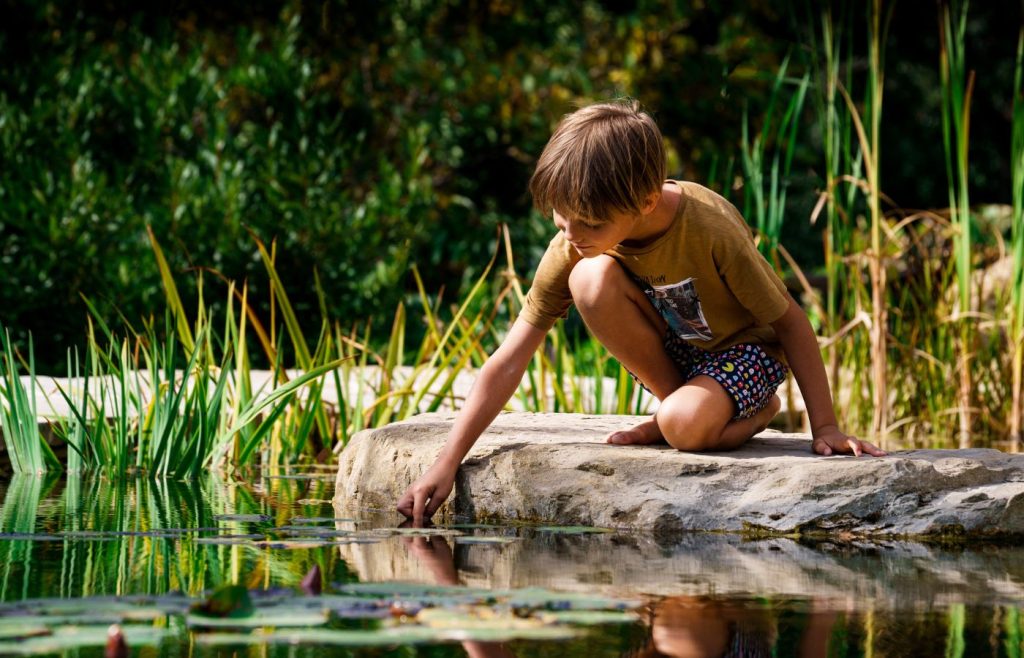
Our children, our children’s children – but hopefully us too – will be able to enjoy a place full of biodiversity, flowers and fruit for all the years to come.
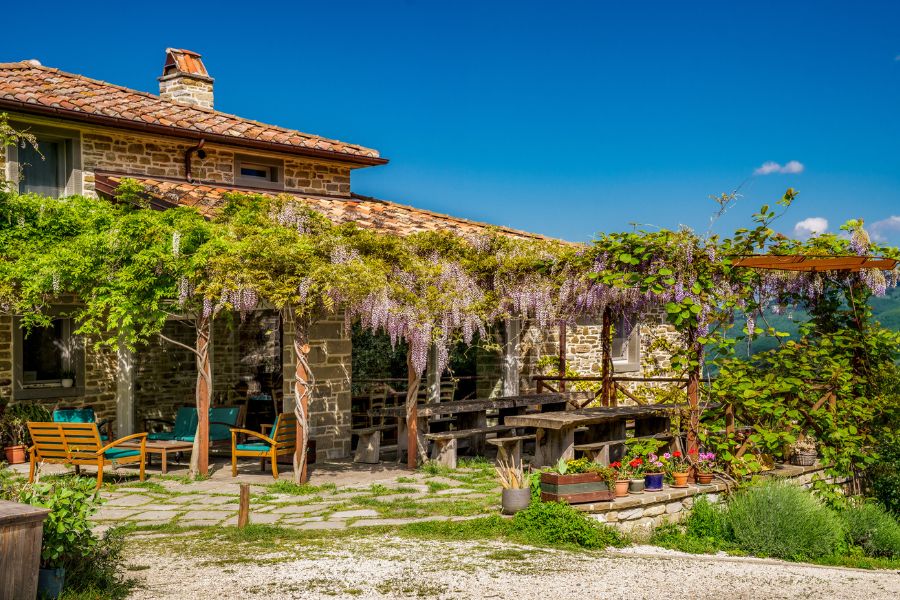
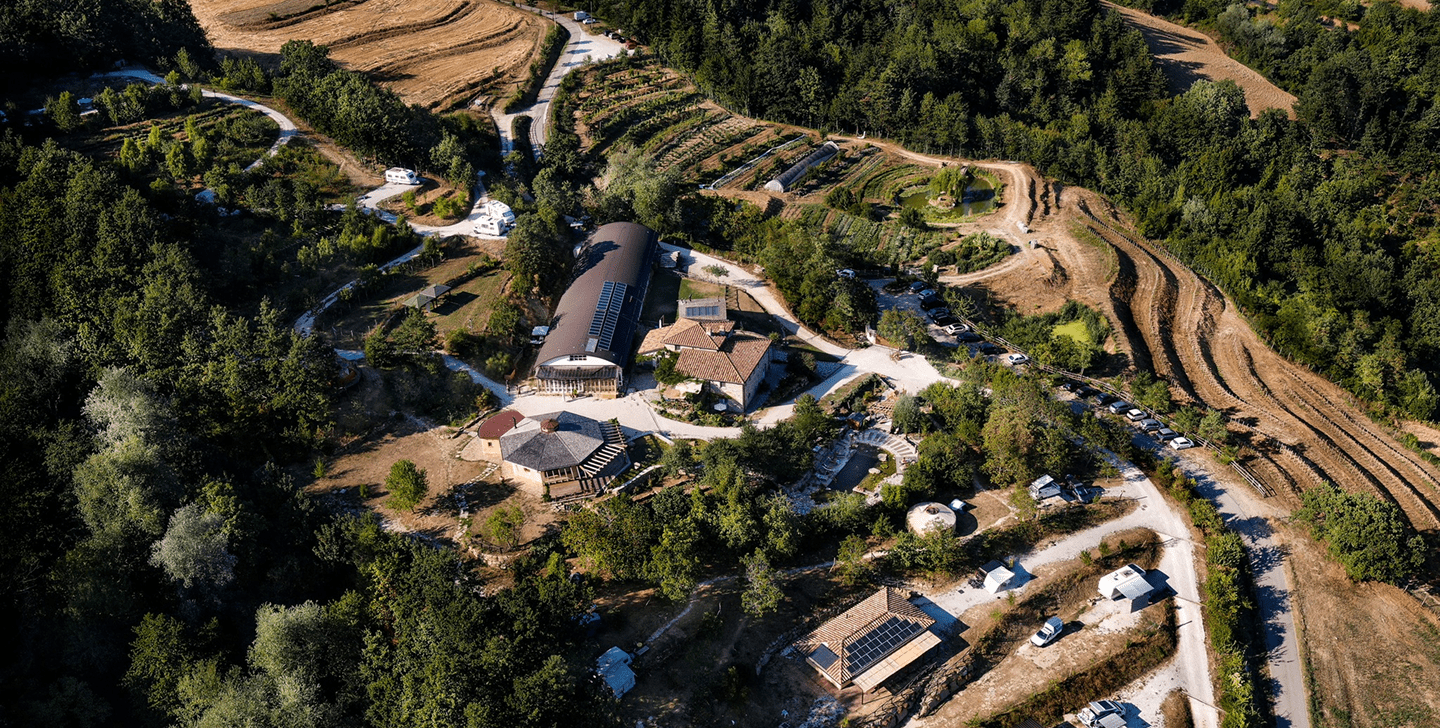
This is the aspect that fascinated me most about this project. Starting from the ruins of an abandoned farm, today it is a place of inspiration for those seeking a healthy life and wanting to live in harmony with the environment.
And this is an example of what each of us could do on our own small scale: dedicating ourselves to an area, whether small or large, in the city or in the countryside makes no difference, where we try to recreate the conditions for a life in balance and harmony with all living systems.
A legacy to leave to future generations. Whether seven or more matters little. A place like this where children are born today, after decades in which they were no longer born, a place where a healthy lifestyle is shared, good food is grown, there are splendid buildings constructed in full respect for nature.
This is the greatest message of this place: you can, you must do it.
For us and for the next seven generations.
_
This article was featured on rivista Vivi Consapevole 75 (december 2023/february 2024).