
One of the questions we receive most often when we publish photos of our vegetable gardens, orchards and vineyards concerns crop protection:
how do we protect them from wild boars, fallow deer, red deer, roe deer and other wild animals?
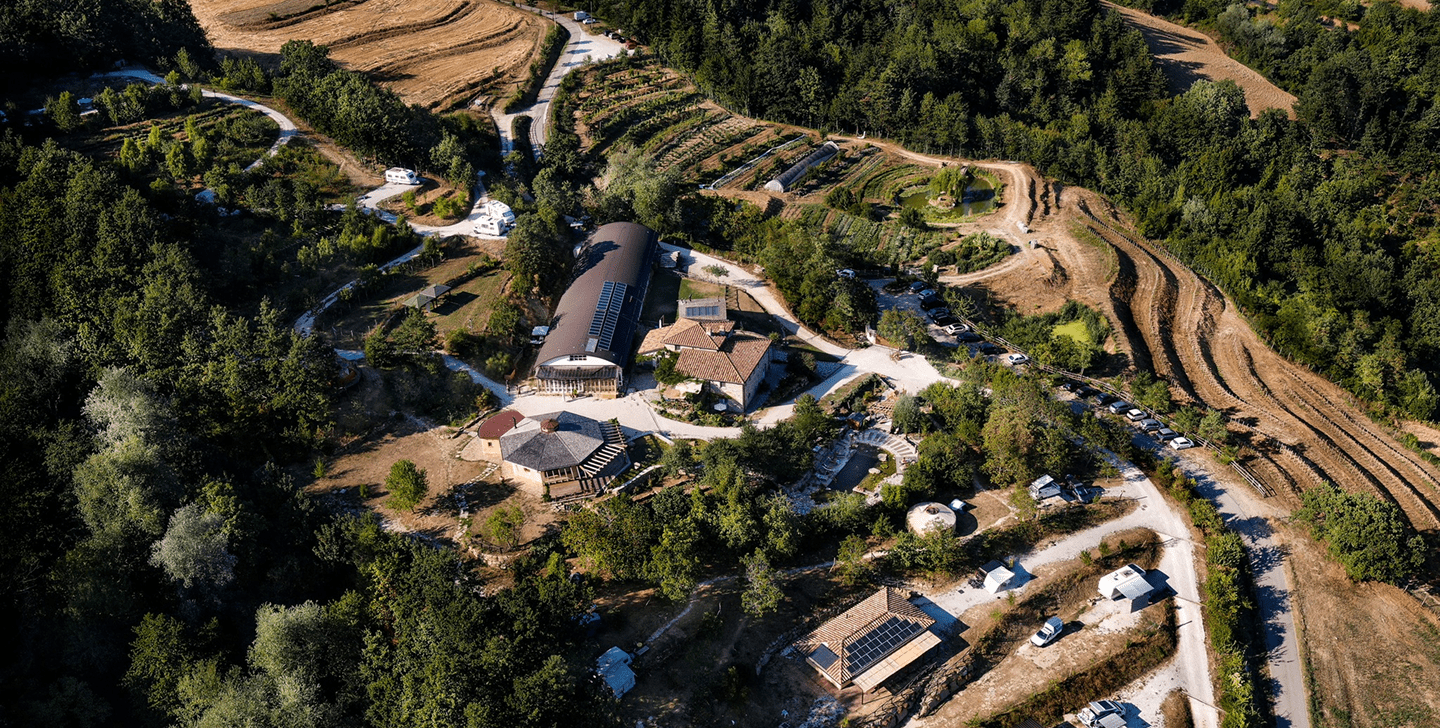
La Fattoria dell’Autosufficienza is located on the borders of the Casentino Forests National Park, an area where approximately 84% of the surface is covered by forests. This means that wildlife is abundant and that animals, especially at the forest edges, move regularly in search of food.
In this context, any unprotected crop is inevitably preyed upon, even when it is just a few metres from roads or buildings.
For this reason, over the years we have tested various protection systems, learning in the field what really works and what instead has too many limitations.

The protection systems that we have tested
Mobile electric fences (2010)
The first method tested, in 2010, was the use of mobile electric fences, with lightweight posts and tapes connected to an energiser.
This system was soon abandoned as a defence against wild animals. It works well as temporary containment (we still use it today to take donkeys and chickens to pasture), but has too many limitations against large wild animals.
The main problems are:
- poor resistance to wind, snow and falling branches
- the grass immediately discharges to the ground, limiting functionality
- the plastic posts tilt, fall and break
- the tapes and posts break easily due to accidental impacts by wild animals, bad weather and falling branches if we are in a woodland environment (there is always woodland at the edge of our fields)
The maintenance required is excessive and the effectiveness poor.
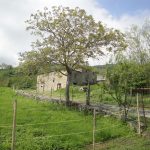
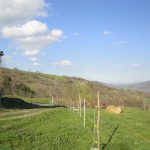
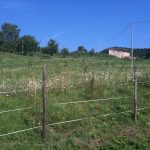
Loose-mesh metal netting with chestnut posts (2011)
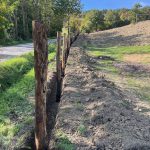
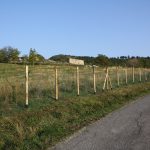
In 2011, noticing the limitations of the first fence built to protect the orchard and vegetable garden, we decided to create the first fixed fence in loose-mesh metal netting combined with chestnut posts approximately 12 cm in diameter, to protect 2 hectares around the farm centre.
Main features:
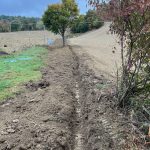
- netting: h 1.75 m, 50×50 mm mesh, 2.5 mm thickness. 25 cm buried to prevent digging
- barbed wire: at 1.65 m and a second at 1.80 m
- chestnut posts: Ø 12, h 2.5 m, spacing 2 m
After more than 15 years, the fence is still in good condition and does its job well.
The main problems are:
- high cost also due to installation time
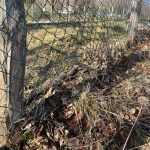
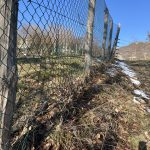
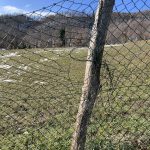
- the netting can be damaged by fallen tree branches or, in some cases, by animal bites or accidental impacts (see images)
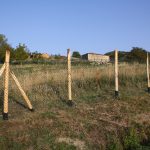
Electrified metal wires on chestnut posts (since 2016)
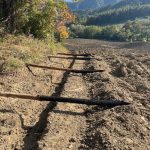
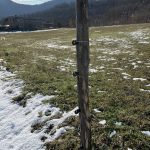
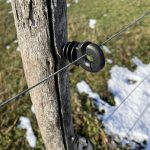
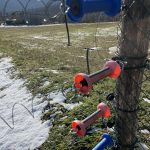
Since 2016 we have been testing a system with electrified metal wires for extensive arable crops where we grow cereals, pulses and seeds, which is much more robust than the first electric fences.
Main features:
- 4 galvanised wires 1.8 mm positioned at 40, 80, 120 and 160 cm
- chestnut posts: Ø 12-15, h 2 m, spacing 5 m
- Energiser, near the farm centre connected directly to 220V, in more remote areas with battery and panel
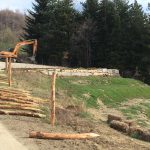
- Along the road near the farm centre we have combined the electrified system with a wooden fence to improve the aesthetic result
Advantages:
- the metal wire does not break
- the permanent chestnut posts are much more resistant (less maintenance)
- the shock is more effective thanks to better conduction
- the grass creates fewer problems, although it still needs to be cut 4–5 times a year
Wild boars do not enter, whilst fallow deer and roe deer sometimes manage to jump between the wires without getting shocked because obviously they do not discharge to the ground when they are in the air.
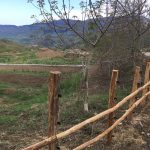
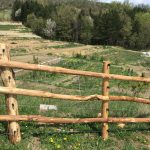
Double-twist wild boar netting (since 2021 – current method)
Since 2021 we have been using what we now consider to be the most effective system, especially for vegetable gardens and vineyards, namely particularly delicate and attractive crops.
Main features:
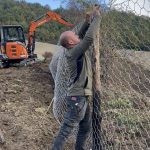
- double-twist wild boar netting: h 2 m, 80×100 mm mesh, 2.7 mm thickness, Ø 3.4 mm selvedge wire. 25 cm buried to prevent digging
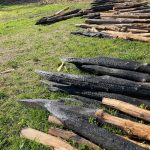
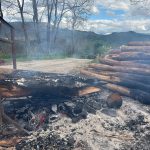
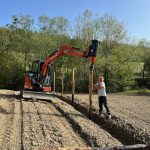
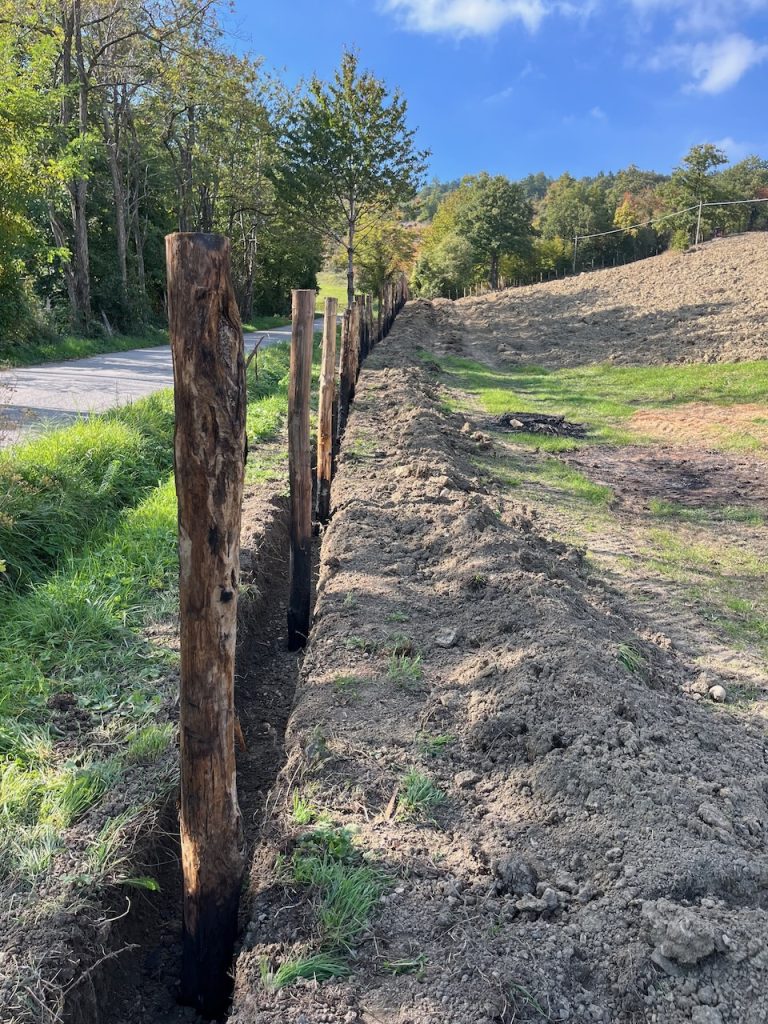
- chestnut posts: Ø 15, h 2.5 m, spacing 2 m (reduced in sloping areas, increased in flat areas). The posts have charred tips in the buried section to increase durability.
This netting is more demanding to install, especially on slopes, but the strength and durability are significantly superior to loose-mesh netting.
To date, the result in containing wild animals has been 100% successful.