
In 2019 I Worked as a Pizza Chef in My Hometown, Ancona. One evening a short circuit caused a fire. The renovation work lasted a month, and during that time I seized the chance to travel a bit.
Tommaso Carmenati | Caretaker of the Autosufficienza Centre
It was October, and, as every year, the camper fair took place in Parma. My partner and I decided to attend and spend a few nights in the area, staying at an agriturismo surrounded by greenery. We found one in Modena, but a booking‑system error meant the reservation fell through. We therefore looked for another place along the route back home.
That’s how we discovered the Autosufficienza Farm. At the time the name didn’t spark any particular interest in me, even though I was already in the midst of a personal transformation. I knew exactly what I didn’t want, but I still didn’t know what I wanted. I felt a bit like the protagonist of Paulo Coelho’s The Alchemist, searching for clues.
On the way to the farm we wanted to spot interesting spots to explore. While browsing the blog at autosufficienza.dartmoon.dev/wp/ we noticed a link connecting this site with Remedia Erbe and Macrolibrarsi.
We stopped to visit those two places. Imagine the surprise and euphoria of someone who feels a resonance with a certain type of environment yet hasn’t yet found anything concrete that embodies it. Sometimes you’re in a location and you can’t pinpoint why, but you sense that the place has entered your life for a specific reason. That’s exactly what I felt.
When Everything Tells You to Return
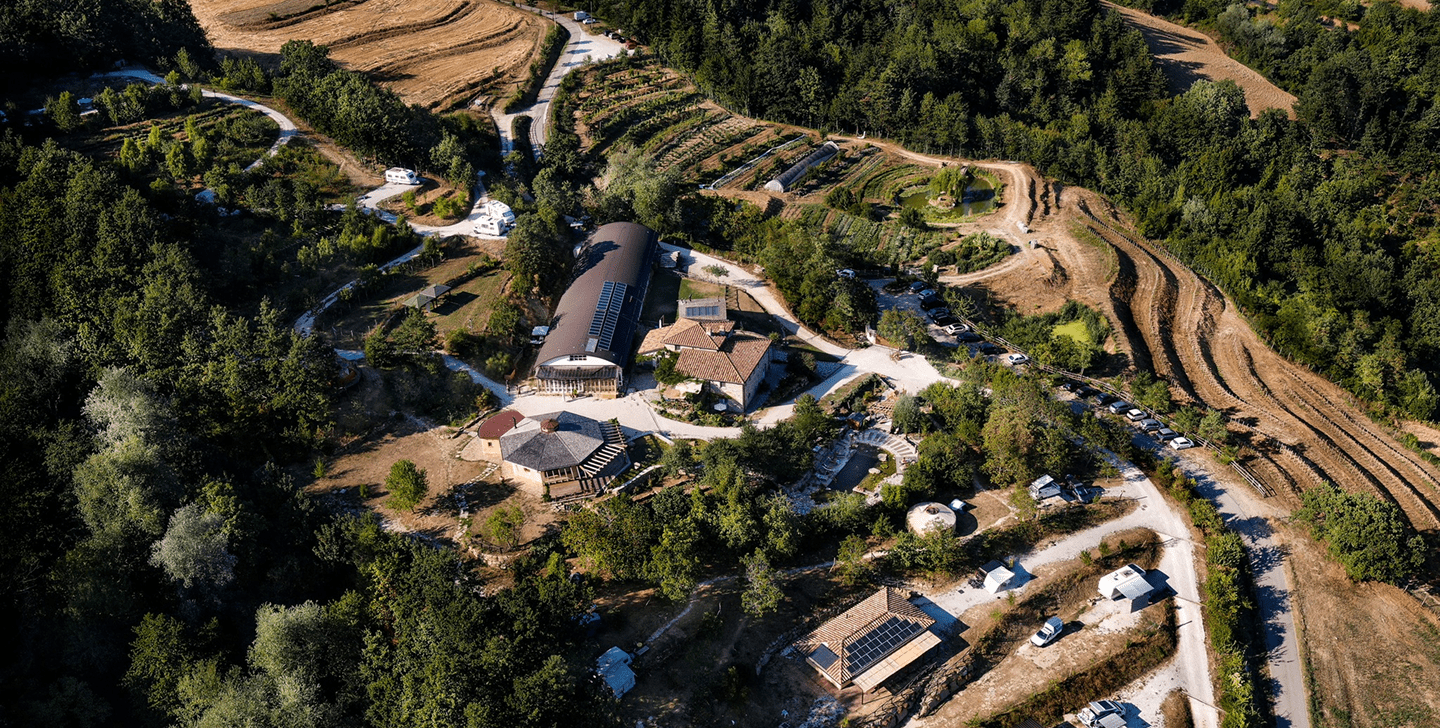
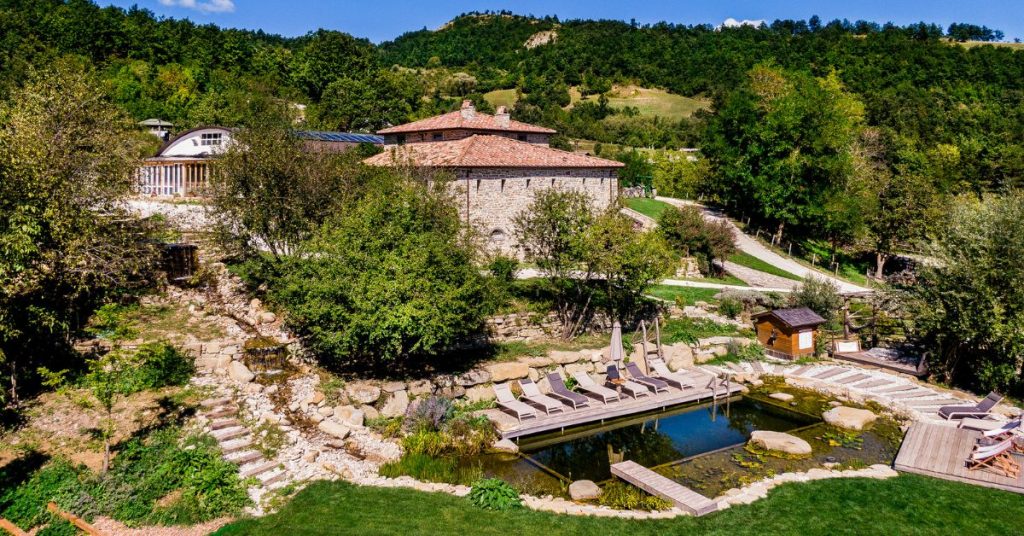
We finally arrived in Paganico, near Bagno di Romagna, the locality where the Autosufficienza Farm is situated. We were greeted by Francesco Rosso, the project’s creator, who that day was filling in for the receptionist. Had he not been there, none of what I’m about to recount would have happened. Coincidence?
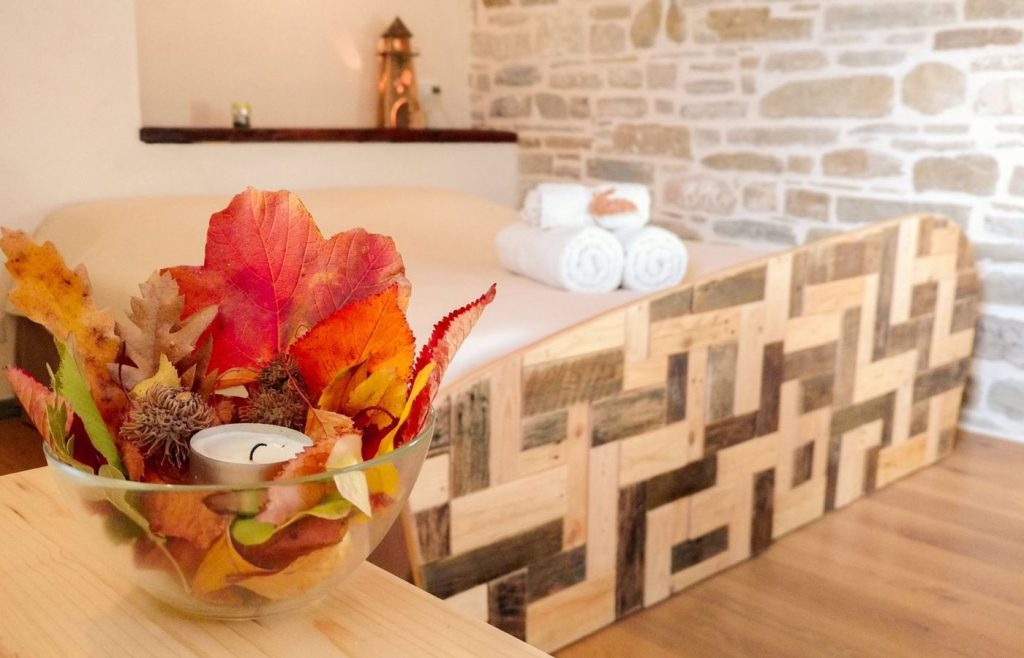
He described in meticulous detail the room we were staying in—Monte Comero bedroom (I’m originally from Ancona, and from my balcony you can see Monte Conero—another coincidence?). I could hardly believe my eyes: did such places really exist in Italy? The next day, the garden manager, Andrea, took us on a tour of the farm. One surprise followed another; it felt like a waking dream.
When checking out, I noticed a wooden sign hanging on the wall beside the reception desk indicating that the Autosufficienza Farm is affiliated with WWOOF Italy, an international association that allows eager young people to deepen their understanding of agriculture through volunteer placements on organic farms.
During that period I was constantly updating a “wish list,” a collection of aspirations I wanted to fulfill in my life. Doing a WWOOF stint at Autosufficienza was a top item on that list.

My first experience as a WWOOFer
The year after, just back from a three‑month trip through Thailand and Bali, the “pandemic” broke out. During that period Macrolibrarsi organized a webinar, Vivi Consapevole Live. The Autosufficienza Farm was featured. It was three days of great enrichment and inspiration. I felt less alone in imagining a different world—more human, more genuine. A few days later I was walking through the woods with the owner of the pizzeria where I worked. When we got to the cars, mine wouldn’t start. I had to call a tow truck. On the walk back home, forced to go on foot, a wild idea struck me: I would call the Farm and offer myself as a volunteer.
The conditions for traveling again were there. My relationship with my ex‑partner had just ended. The enthusiasm for Vivi Consapevole Live was still at its peak. During the webinar many people asked for information about WWOOFing, so the chances of a spot being available were slim. I called. Marzia, the secretary, answered. She told me that just the day before two volunteers had decided to leave. If I confirmed right away, I would secure a place. I couldn’t ignore all these strange coincidences. My heart was pulling me there. The clues, too. It was time to take the leap. That phone call changed my life forever.
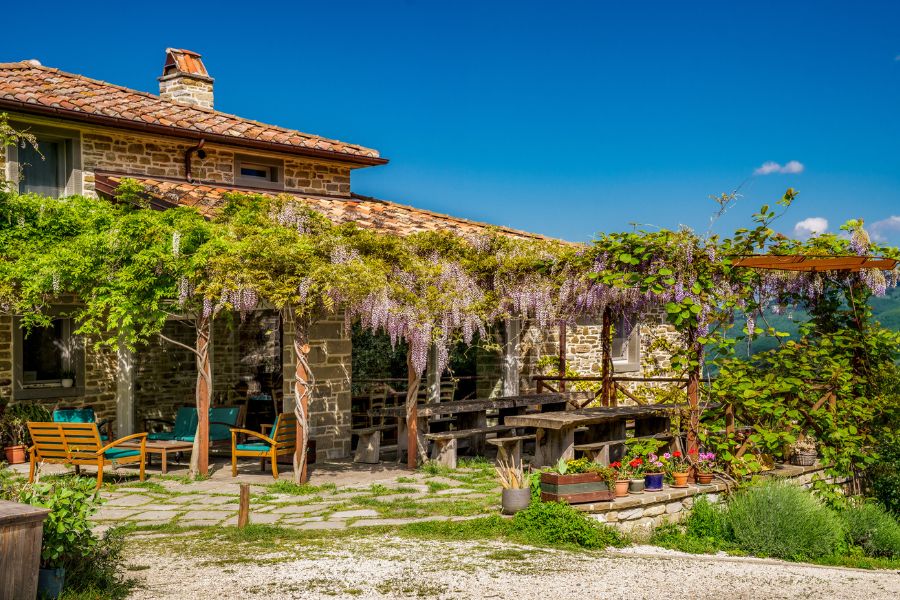
In June 2020 I found myself doing my first WWOOF experience at the Farm. I was supposed to stay for a month; it became three. In 2021 I returned to conduct interviews for the blog project I was following at the time, A Drop in the Ocean. I ended up staying that summer to help out. I spent the winter there in my camper. Now I am here, writing in front of a landscape I’m lucky enough to admire every day—the soft shapes, the birdsong, the shades of green. This is the place where I decided to put down roots. This is the place where I chose to channel my energy to help build a better world.
Work and “Non‑Work”
Since this year my mode of collaboration has changed. I now work full‑time on this project. I handle guided tours, communication, and event organisation, and I often lend a hand with other tasks as well. What has happened, however, is far more exciting.
Aware of the urgency in our society to change direction, I sensed that this place has the right potential to accomplish something truly important—the people who live here, the values that drive them. For the first time I can say I am not “working,” even though these activities occupy most of my day. Even when I am washing dishes, with full respect for the task, I know I am contributing to something much larger. Giving meaning to what we do allows us to completely shift perspective and stop compartmentalising the day into “work” and “non‑work.”
This is the greatest lesson I have learned in this early stage of my life: know yourself deeply, free yourself from what does not belong to your nature, discover why you are here, and set the fire that ignites you in service of the collective.
Changing the World: Autosufficiency, Health, Community
Why can self-sufficiency change the world? What does this term really mean? I always begin guided tours with a brief reflection. Self-sufficiency is not only about being independent in obtaining water, food, or energy. So what does it mean? Simplifying, we can say that the phenomena we observe in society are the sum of the actions we perform as individuals. Those actions stem from our ability to manage our mind, from the relationship we have with our emotions, and from the balance between the spiritual and material dimensions. If we do not know our needs, our inner self, our talents, our passions, how can we even begin to think about achieving even a minimal degree of autosufficiency? In a globalised world where mainstream information directs the masses’ thoughts, if we do not cultivate awareness about various aspects of life, how can we expect to remain unaffected?
That is why self-sufficiency is not just about eating our own food or “knowing how” to do manual work.
So what is the difference between self-sufficiency and health? If we define health not as the absence of disease but as the integrity of all living systems, these two concepts converge.
If I have a good balance with my emotions and am aware of why I do what I do, I will automatically avoid self‑destructive behaviours such as smoking. Thus, this will be an action that moves me toward both autosufficiency and health simultaneously.
If I am conscious of my real needs, I will not eat five times a day but perhaps twice—or even once. This triggers a cascade of reactions: reduced demand for food on the global market, lower pollution, decreased personal inflammation, and consequently an improved mood, better overall health, stronger relationships with others, higher energy levels, and less reliance on social‑health support. All of this reverberates throughout the community. The examples could continue endlessly. It is no coincidence that Mother Teresa of Calcutta herself said that a single drop makes up the ocean, and without that drop the ocean would not be the same.
That is why self-sufficiency can change the world. That is why this path, even if pursued progressively, must be undertaken as soon as possible. Every day, in every moment, we can choose with our actions the direction in which society moves. It is essential never to underestimate a single gesture or a single individual.
Community as Mutual Support
Community should not be confused with an eco‑village or the myriad sharing‑of‑housing models that are increasingly popular today. Community means restoring a spirit of mutual support. Community means returning to being human beings. The human species is not the strongest nor does it possess the best internal thermoregulation systems. Humankind achieved its apex in the food chain thanks to its innate tendency to collaborate, to form clans. The sense of community is what we can still find in families and neighborhoods of fifty years ago, and in any context that manages to withstand the wind of globalization. It means being there for one another. It means putting one person’s talent at the service of many.
Understanding this aspect is crucial for moving toward autosufficiency and, consequently, toward health. Imagine a young couple who have just welcomed a child. Raising the child without the support of a group can have extremely heavy repercussions. If a mother is often alone because, for example, the father works, she will have to set aside all her passions to devote herself wholly to the child. How many postpartum depressions are linked to this situation? And how do these clinical pictures affect the integrity of the individual, the partner, and the entire community?
Concrete Utopia
When Francesco founded the Autosufficienza Farm, he already knew that autosufficiency would be an utopia: it is impossible for a single place to contain everything needed for life.
Thus, in 2020 the territory Guardians of the Earth community was created. It is a coalition of virtuous initiatives that have joined forces to bring value to their region. Remedia, Autosufficienza, Cambio di Marea, Biopificio, Matura Bio, Nel Nome del Pane, Disimparando s’impara, Tecnologie Alternative: these entities are striving to become the change they wish to see in the world and have realised that acting alone would make the path far more arduous than working together. They start in one territory and aim to “contaminate” others—like a snowball that, when it falls, triggers an avalanche.
I have always wanted to travel, to discover the diversity that inhabits this world—its cultures, rites, customs, traditions. Here I have been able to experiment with a different kind of travel. Here I understood that, through example, consistency, and heart, it is still possible to change the world. Here there is a handful of men and women. Simple people, with strengths and flaws, still plagued by the weaknesses and vices that characterize humanity, yet moving toward ever‑deeper awareness. What matters to me, however, is that this group nurtures in its heart the desire to see its children grow up in a world full of beauty. And when you feel that in your heart, the road may indeed be uphill, but it is unlikely that anything will stop you.
This article was featured in the magazine Vivi Consapevole 71 (December/February 2023).