
With permaculture farms become natural works of art
In the early Nineties, when I was still in primary school, the adults decided I couldn’t go to school because I wasn’t vaccinated. At that time I lived with my family in an isolated house on a hill and so I spent entire days with my dogs running in the woods that surrounded the house. I was attracted to and in love with the nature that surrounded me. I jumped over gurgling streams, chased wild animals and cuddled my big dogs so grateful for the runs we took together. After about two years, when I returned to school, my outings decreased, but my attraction to nature remained intact: so when the time came to choose the secondary school direction, I chose the Institute for Agriculture and the Environment with the idea of becoming a forest ranger when I grew up, to be able to continue living surrounded by woods.
Farewell mountains
After two years my family moved to Cesena and so I decided to transfer to the Agricultural Institute as the same course didn’t exist in the city. I spent the next three years of agricultural school thinking I would never work in agriculture. I don’t remember, at the time, what idea I had of agriculture, but it wasn’t something that attracted me. I thought of the farm as sad flat fields cultivated in monoculture and of the farmer as a person who spends most of their time on a tractor or inside a smelly barn. I didn’t associate the farm with something beautiful: I believe that agriculture, since the advent of industrialisation, has been seen as something negative, poor and dirty. Expressions like “down-to-earth” or “being down” are an example of how our language refers to agriculture and land as if they were something derogatory. I think this also had an influence in my childhood. I finished secondary school and completely abandoned the field of nature and agriculture enrolling at the Faculty of Tourism Economics. At the same time I began to run Macrolibrarsi, at that time mail order commerce of books for the wellbeing of body, mind and spirit.


The discovery of permaculture
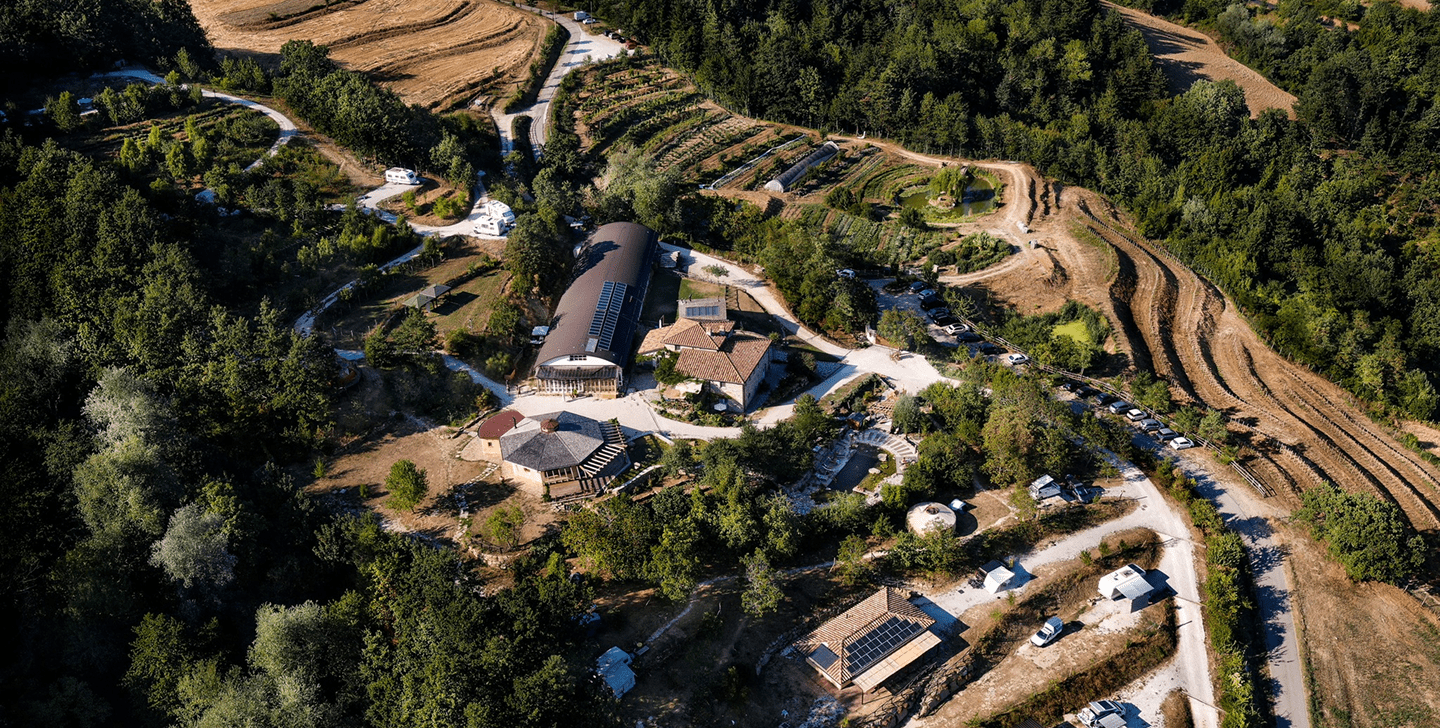
In 2009 – I was 24 years old – I had the opportunity to purchase land in the mountains with the objective of making my family self-sufficient and resilient. The convergence of environmental crisis, economic crisis, energy crisis and the risk of food and water crisis led us to purchase a farm abandoned for over 10 years with the objective of self-producing food and energy. The farm centre was for me something very agricultural and not very natural. Dilapidated and almost collapsed sheds covered with asbestos, rusty iron tools everywhere, a mountain of smelly manure, plastics and other scattered waste, electricity and telephone pylons that crossed the property. On the other hand the woods, meadows and mountains that surrounded the centre of the farm were spectacular and it had been love at first sight. Now that I was in possession of a farm I had to learn everything I should have already known because I had been to school, but which in reality I had never learnt. Agriculture as I had studied it at school, and as it’s normally practised, continued not to please me and I discovered there was a way to design a farm in a completely different way and imitating natural models: permaculture.
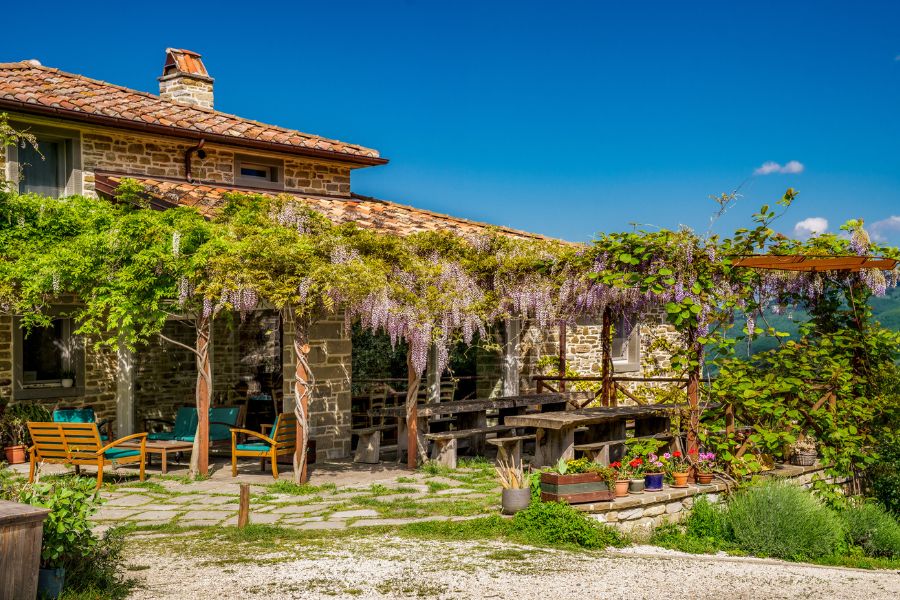
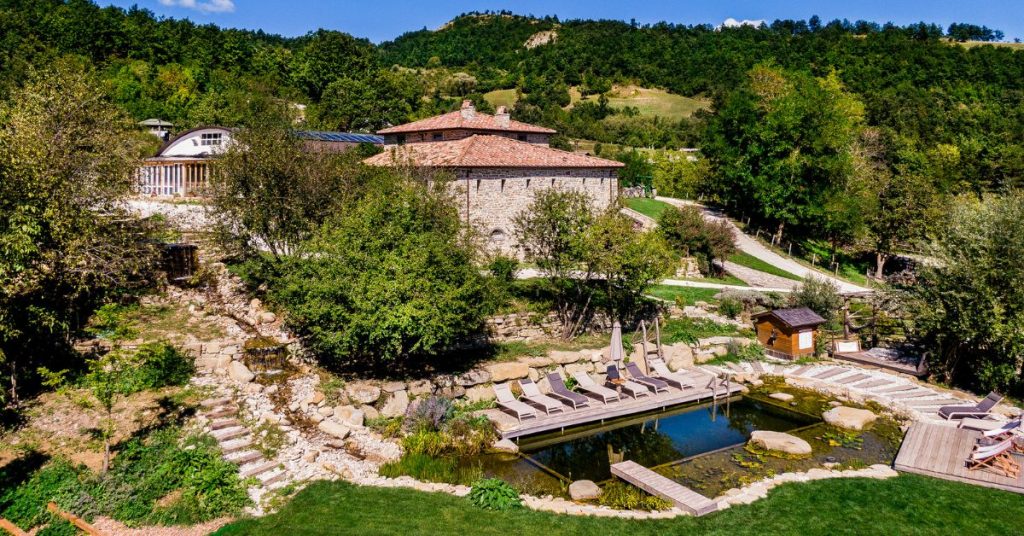
So I started studying again, taking courses and visiting permaculture experiences even abroad. I soon met spectacular farms where beauty and nature had the upper hand over man. The farmer’s main work was no longer to contrast nature, but to go along with it as much as possible to obtain an advantage from it. Farms such as Sepp Holzer’s Krameterhof or Panos Manikis’s Natural Farm profoundly influenced me and I understood, thanks to them, that it was possible to create a farm I could be in love with, just as happened to me with woods when I was little. I began to design and create natural orchards and vegetable gardens, food forests (edible forests), polyculture terraces, arboriculture, hedges, lakes, pastures with chestnut wood fences, dry stone walls, structures in bio-architecture and natural building.


Agriculture and nature: a single love
The result is that this year when I left for the holidays, saying goodbye to the animals, trees and mountains of the farm I had tears in my eyes. Today I love agriculture as I love nature. When I move away from home I always observe with admiration how man has shaped the landscape over the centuries, I love hearing the stories of elderly people about how agriculture was done in the past and when I travel I always enquire about the agricultural tradition of the place. Obviously the fascination for unspoilt nature remains, but accompanied by the awareness that man too, with the right stimuli and appropriate knowledge, can create natural paradises. Increasingly numerous studies, conducted in every corner of the world, demonstrate the benefit, in terms of physical and psychological health, in spending time in nature and usually one refers to centuries-old woods, mountains, lakes and in general to the least urbanised places. Autosufficienza Farm today has the arduous objective of demonstrating that such benefits can be experienced even living in buildings built with natural materials, eating genuine and self-produced food and working in structures and fields inspired by natural models.