


How We Built the Octagonal Temple
The Autosufficienza project began in 2009 with the acquisition of abandoned land and a ruin surrounded by dilapidated barns with asbestos roofs.
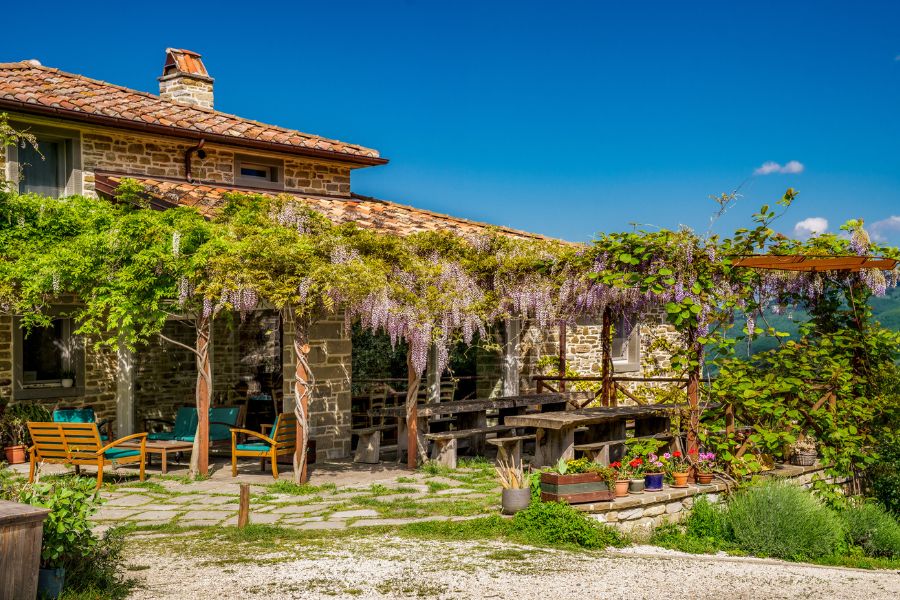
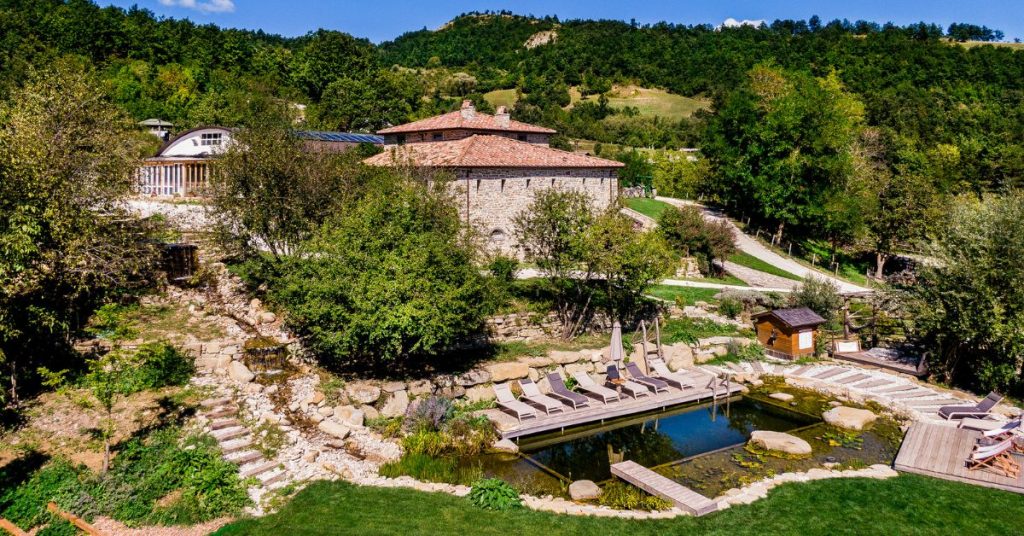
One of the very first objectives was to renovate the ruin, the stone, and create new structures for hospitality and cultural activities.

The Choice of Straw Bales
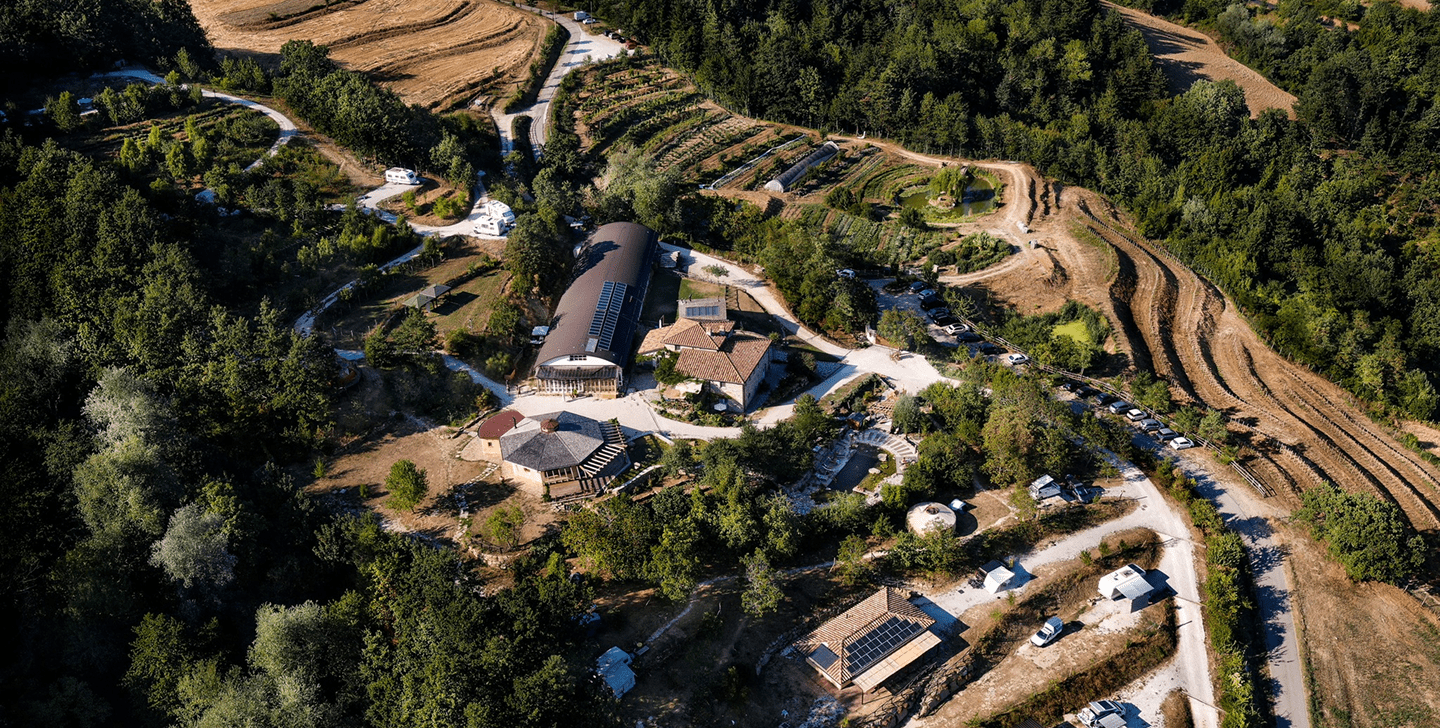
Together with the architectural studio Filo di Paglia, in 2016 we developed a master plan that called for the renovation of the stone ruin, the complete demolition of the old dilapidated barns, and the reconstruction of roughly 1,700 m² of structures—including an octagonal temple, an agro‑camping site, and an earthship‑style underground complex that will house guest rooms, multifunctional halls, a wellness centre, offices, a laboratory, a library, and a shop.

Following the renovation of the stone ruin—opened in 2017—the construction of the terraced agro‑camping and the octagonal temple dedicated to yoga, meditation, and psychophysical wellbeing was launched. In this case, unlike the first structure, which was bound by conservative restoration constraints, we had full freedom in choosing forms, materials, and finishes. We decided to build the new structures in wood, using straw as infill on both the walls and the roof.

Straw seemed to us the most ecological solution we could adopt. As an agricultural company we produce wheat, and straw is the by‑product of the harvest. Like many producers, we generate far more straw than we can use, so we often leave it shredded in the field. The idea of turning this “waste” material into highly energy‑efficient buildings appealed to us immediately.

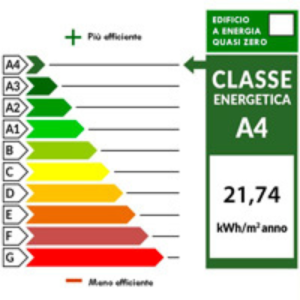
Energy savings is another decisive factor. Aiming for self-sufficiency, we need our buildings to minimise energy consumption, especially heating, since we are located in the mountains. Straw bales provide incredible insulation that can easily retain heat inside during winter and keep it outside during summer.
Finally, for all of our constructions we consistently choose only natural and ecological materials, as the entire project is based on that philosophy.
A Straw Temple
Contrary to what one might imagine, the municipality of Bagno di Romagna accepted this building method without difficulty, even though it was the first time a project using these materials had been presented. After entrusting a specialised company with the foundation and the wooden structure, we proceeded with the placement of the straw bales together with Andrea and Francesca from Filo di Paglia, who are not only architects but also artisans and natural builders.

After the straw bales were installed, it was Tecnocanapa’s turn to encapsulate the straw bales in hemp‑lime to prevent risks from fire, water, insects, animals, or any other factors that could prove fatal for this material. In addition, the hemp‑lime creates a more uniform surface for the application of plasters and adds further insulation, increasing the mass inside the walls—a crucial factor for retaining heat in winter and keeping interiors cool in summer.


Finally, to complete the walls we used exterior plaster made of cocciopesto and interior plaster of raw earth.
In this building, unlike the stone farmhouse, we chose to simplify the building services to the utmost: no mechanical ventilation (WMV), no wall‑ or floor‑mounted systems, and no electronics. The main hall, the changing rooms, and the bathrooms are heated exclusively by a large thermal‑mass stove, crafted on‑site by Filo di Paglia.

The cooling system of the Temple is inspired by Roman‑era buildings: at the highest point of the structure there are windows that, when opened, let hot air escape. As the warm air exits from the top, a slight depression forms in the hall. Consequently, air is naturally drawn in through vents placed near the lower part of the walls, which are connected to underground ducts leading to the adjacent forest. The cooler forest air is further chilled as it travels about 35 meters beneath the ground, so the interior of the building receives fresh, naturally cooled air—without the use of mechanical air‑conditioning.

The windows are made of wood, but to avoid the maintenance issues encountered in the main building we installed a 1.5‑meter‑wide eave to protect them from sun and weather. The finishing solutions echo those of the previous building, but with additional elements such as the beautiful bathrooms crafted in cocciopesto, an ancient Roman waterproofing technique. The final result is an extraordinary work of rare beauty.

For more information about the octagonal temple, see also the page dedicated to the octagonal hall.