


By copying we can change the world
At school they teach us not to copy
At school I rarely accepted submitting to the teachers’ will if I didn’t consider it suitable for the situation, and for this reason inevitably I happened to be in conflict with them. I didn’t particularly love studying academic books, but I read a great deal and this always helped me to obtain rather high marks, even if I wasn’t particularly prepared on the specific subject. In the final years of secondary school I had refined the technique of copying from my better-prepared classmates. Thanks to better presentation, not infrequently, I managed to get a better mark than the classmate from whom I had copied.
Obviously for the teachers copying was very serious, if discovered I was punished and the more prudent students made sure I didn’t copy from them. No teacher ever proposed doing an oral test or a written test in class where copying and/or cooperating amongst ourselves was something positive. The school orientation was already meant to prepare us for a world of independence, competition and rivalry.
Without any specific preparation, due to various circumstances, at twenty I found myself managing as webmaster the newly born website www.macrolibrarsi.it. It was 2005, e-commerce sites were still largely unknown to most of the Italian population and I myself had never made online purchases. How then to develop an e-commerce without having any specific knowledge in marketing, software, internet? I began to browse the most innovative and high-performing websites in the world – at that moment they were mainly found in the USA and Canada – to copy what seemed most interesting to me for Macrolibrarsi. In 2006 I became managing director of the company and therefore I also began to train myself on how to manage a company, how to coordinate a group, etc.

“I could emulate successful models to obtain results, and so at the young age of 21 I was able to grow a company very quickly despite having no experience or expertise, simply by copying the success factors that had propelled other businesses forward and surrounding myself with people who possessed the skills I lacked.”
One of the first lessons I learned was that a company needs a team built on the values of cooperation rather than competition, contrary to what we were taught in school. The most skilled practitioners in their fields had to transfer their knowledge to others; the most effective managers were those who helped their subordinates grow, not those who hoarded knowledge for themselves. Henry Ford was dismissed as an ignorant, yet his ability to surround himself with people more knowledgeable than he was allowed him to create the largest industrial empire of his era.
Copy the best and change the world
In the early years of my career I copied American corporate models. I wanted to build a thriving company whose revenue increased year after year. The outcomes were spectacular and almost immediate, but eventually I realised that becoming wealthy, owning a villa with a pool, a yacht, and a luxury car was not the purpose of my life. Purchasing 70 hectares of mountain land to create a family‑resilience project led me to abandon the reading lists of prominent entrepreneurs and consultants from U.S. multinationals. I began to turn toward models of sustainable agriculture, permaculture, the economy of the common good, ecology, and eco-subversion. Frameworks that no longer speak of infinite growth but of cyclicality, self‑regulation, cooperation, and trust.


Inspiration Is Everywhere: It’s Up to You to Copy It!
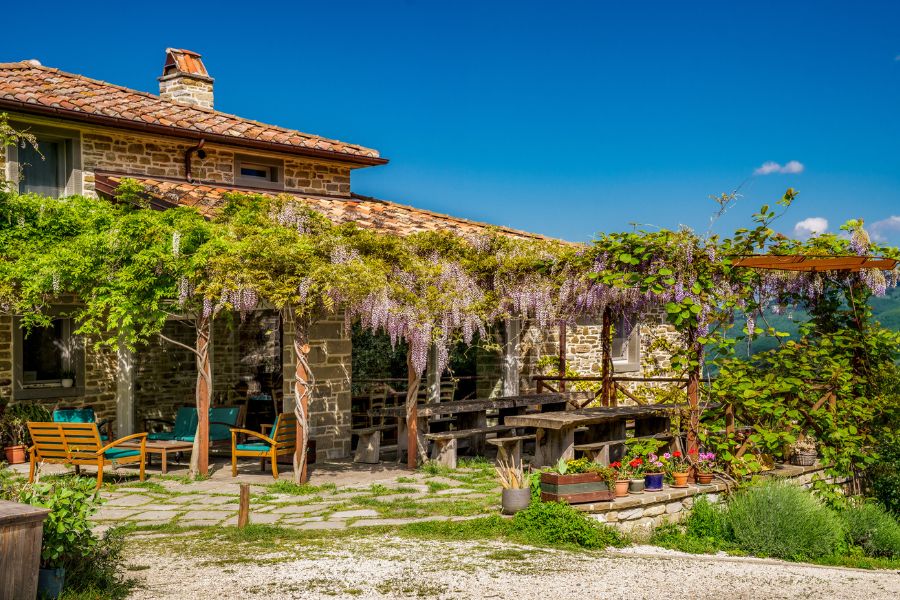
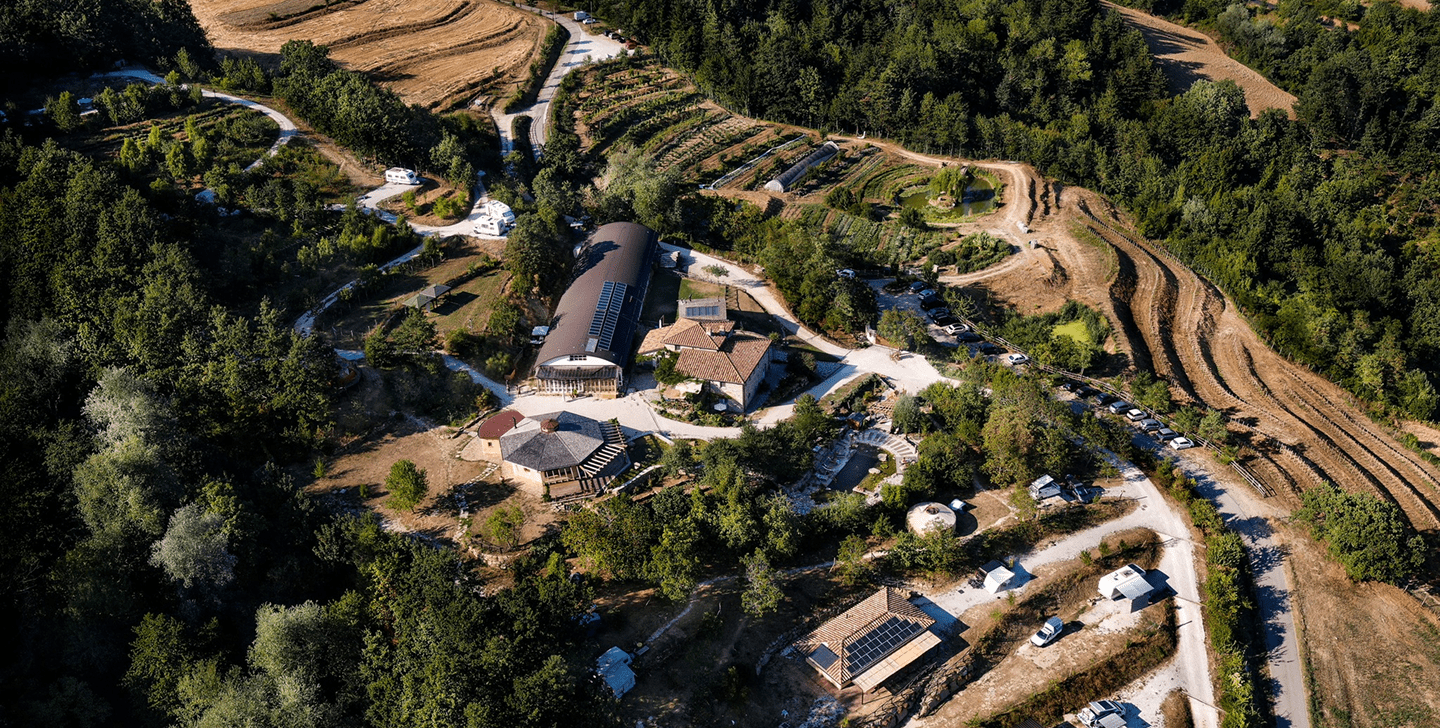
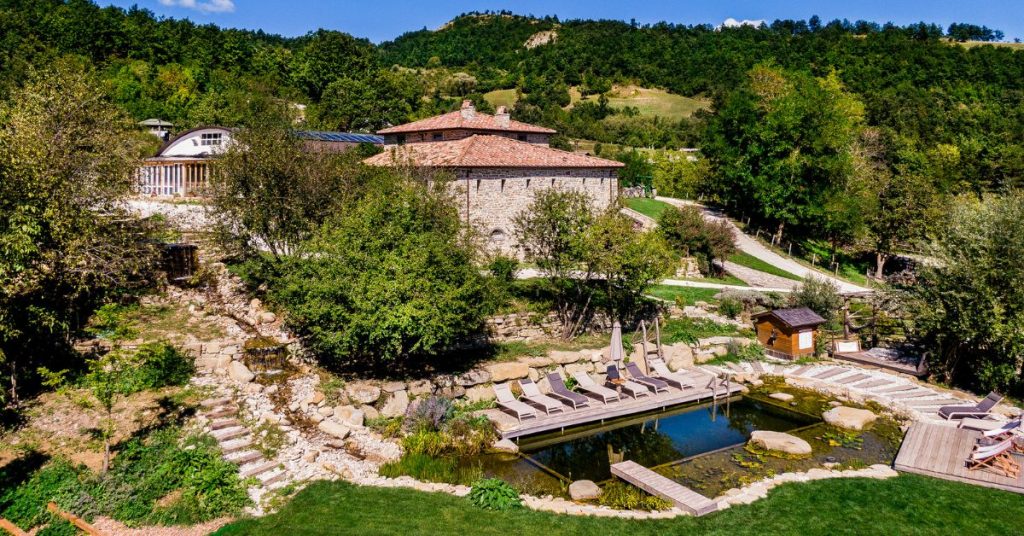
Travelling to eco‑villages, organic farms, yoga and meditation centers, natural parks, permaculture enterprises, and environmental hubs has become a constant source of inspiration for me. It led me to create the Autosufficienza Farm, a place that, for me and for an ever‑growing number of people, embodies the change we want to see in the world.
In Sepp Holzer, the Austrian rebel farmer, I found the essence of an excellent sustainable mountain‑climate agricultural model, the very climate in which we built the Farm at San Piero in Bagno. In “Remedia Erbe” I saw how beauty, passion, coherence and knowledge can transform abandoned ruins into a thriving space for work and exchange for many. In the German Euz (center for energy and environment) and in the architect Friedensreich Hundertwasser I discovered a remarkable new way of building; in Christian Felber and his economy of the common good I found a model for sustainable economics; in The Sanctuary Thailand, Rancho Margot, Pachamama, Swasti Eco‑Cottage … I encountered compelling examples of hospitality and eco‑sustainable tourism.
At Autosufficienza Farm I did not invent anything new—simply copied and often improved what already existed. The goal is for the Farm itself to become a model for others to copy. Today there are whole‑city models, such as the Transition Towns, that, if emulated, can secure a viable future for us.
Continuing to follow the models that led us to the abyss we now occupy is sheer madness. We must abandon the paradigm of competition and move toward cooperation—not only among ourselves but also among every being that shares this splendid planet with us.
Let’s start creating the change we want, and then we can finally say the exact opposite of what we were taught in school: FORBIDDEN NOT TO COPY!
The Transition Town: copy to believe! |
|
The Transition Towns are the movement founded by environmentalist Rob Hopkins in Ireland and England in 2005‑2006, with the goal of raising awareness about sustainable settlement and preparing for the flexibility required by ongoing changes. Transition Towns are based on a resilient, multidisciplinary, and creative approach to produce energy and achieve energy independence, promote natural health and education, protect the economy and agriculture, moving toward a sustainable future for the city and its inhabitants. Communities within Transition Towns are encouraged to seek methods to reduce energy use and increase autonomy at every level. At the core of the movement is the idea that a life without oil can actually be more rewarding, lovable, and satisfying than the current one.
In Italy there are several Transition Towns officially recognised by TN and coordinated in a very gentle manner by www.transitionitalia.it. One of the first was Monteveglio in the province of Bologna. The number of involved communities is constantly growing, with many towns nearing “official recognition”. |

Written by Francesco Rosso