


The word to those who, in everyday life, commit themselves to bringing freedom into their life and the lives of those who live around them. Interview with Francesco Angelo Rosso, born in 1985 and one of the youngest entrepreneurs in Romagna. Life has led him to live personal and work experiences aimed at the search for freedom. True freedom. That which is not devoid of rules but can also be experienced without rules. That freedom which adheres to precise procedures and which becomes freedom when it binds itself to self-sufficiency. – Edited by the editorial team of Vivi Consapevole in Romagna.
Do you feel like a free person?
Unfortunately no. I constantly realise I depend on patterns, conditioning and rules that imprison me. I realise it even more after feeling free for a few days.
Would you like to tell us how you managed to feel free for a few days?
It was February, 2014. After a really stressful year, I decided to drop everything for a month. I took a plane to Koh Samui and then a ferry to Koh Phangan, a small island in Thailand, which a friend had told me about.
I was alone, I didn’t have a plan. About the island I knew I would find families renting wooden bungalows immersed in nature and near splendid beaches.
When I arrived, it was dark and I didn’t feel like looking for a place to sleep, so I started walking for two hours on the beach under the stars. On my shoulders I had a 15 kg backpack and so many, too many thoughts. In the end, exhausted, in the dark, not understanding anything about the place I was in, I entered the first hotel I saw along the road. A few minutes later, I was already sleeping.
The next day I discovered I was in a very touristy part of the island and that instead on the other side of the island, reachable only by a small taxi boat, there were the families with bungalows, immersed in the forest that my friend had told me about.
So I took a small boat and had myself dropped off at the first beach on the opposite side of the island. I set off walking again and having reached another smaller beach, I was attracted by a beautiful wooden structure integrated into the rock and amongst the trees called “The Sanctuary”. I discovered I could sleep there. There was also a vegetarian and fish restaurant. In the structure there were temples where yoga is practised, a spa where treatments are done and a beautiful ecovillage integrated into nature.
I immediately booked accommodation in a shared room by the sea (spectacular!!!) at 5 dollars a night. I soon realised I was in paradise…
I didn’t have my computer with me. My mobile phone was always off. Nobody was looking for me. Nobody expected anything from me. I woke up and got up when I felt like it. I ate when I was really hungry. I drank fresh coconut on the beach. I read on a hammock in the shade of beautiful trees and a few metres from the sea. I let go of all the thoughts I had on my shoulders. I forgot about everything. I was free. Free from any conditioning. Free from anything I had to do. Free from thoughts. A mental clarity rarely experienced.

What a wonderful experience! You’ve transmitted to me a strong desire to find myself in the same situation. I know your dream is to create a Self-Sufficient Farm. Do you think that once self-sufficient you’ll be able to experience the same freedom?
Before answering you a premise is necessary on what self-sufficiency is for me. I could say that self-sufficiency is synonymous with freedom, so much so that the opposite of self-sufficiency is dependency and if we depend we’re hardly free. I think we should all roll up our sleeves and try to no longer be dependent on multinationals for water, energy, food and health. Unfortunately one rarely reasons about these aspects, without thinking about whom we depend on to live. Most of the so-called developed peoples have left their lives in the hands of a small group of multinational business corporations whose main objective is to enrich themselves infinitely, without regard for our health and for the environment, which always come after profit. There’s only one way to free ourselves from this world oligarchy and it’s to stop buying their products. Indeed, if we decide to buy what’s possible locally, we’ve taken a big step, we’re helping our community, we’re containing the power of multinationals, we’re weaving relationships. But we can take a further and even nobler step which is that of self-sufficiency. Usually self-sufficiency is also resilience. In “One Second After” by William R. Forstchen (Macro Edizioni 2011) the author makes a realistic reconstruction of what would happen to humanity in case an unforeseen catastrophic event occurred, which knocks out electricity for a prolonged period of time. Those who depend on hospitals and medicines are without hope. Those who don’t have food and depend on the supermarket remain fasting. Those who receive water through long networks, powered by pumps, remain dry. Those instead who have their own spring water or collected by gravity, their own vegetable garden, their own wood to warm themselves, self-produce energy, treat themselves without chemical products… have many more possibilities to remain unscathed compared to a catastrophe or in any case adapt to a new way of living.
I think we should all roll up our sleeves and try to no longer be dependent on multinationals for water, energy, food and health. Unfortunately one rarely reasons about these aspects, without thinking about whom we depend on to live
Ultimately what is the answer? That a person is free when they don’t depend on multinationals and the many conditionings induced by them. If then they’re free in a broader sense, I’m not able to say. Perhaps they become slaves to the vegetable garden and their own animals, but at least the thing is under their control.


Where is your dream of Self-sufficiency at?
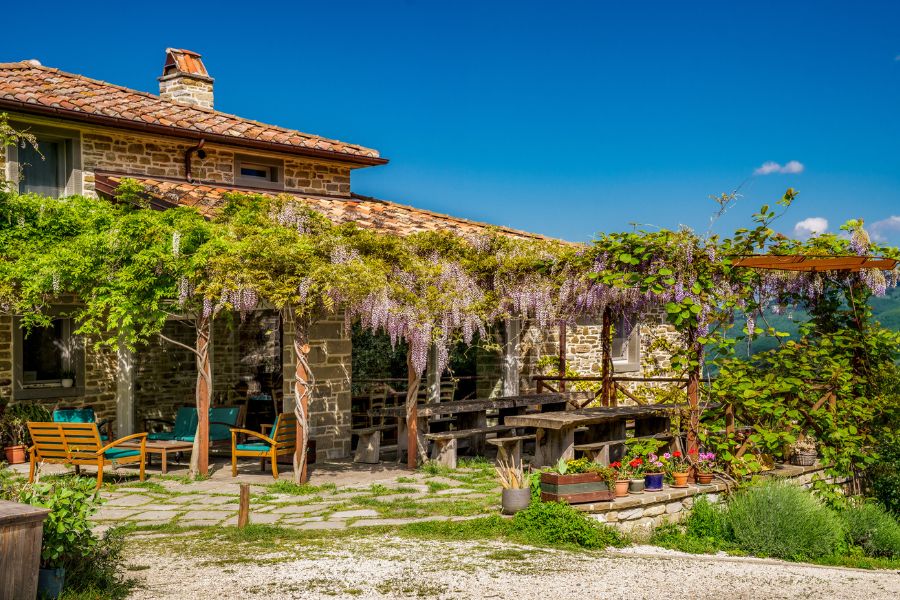
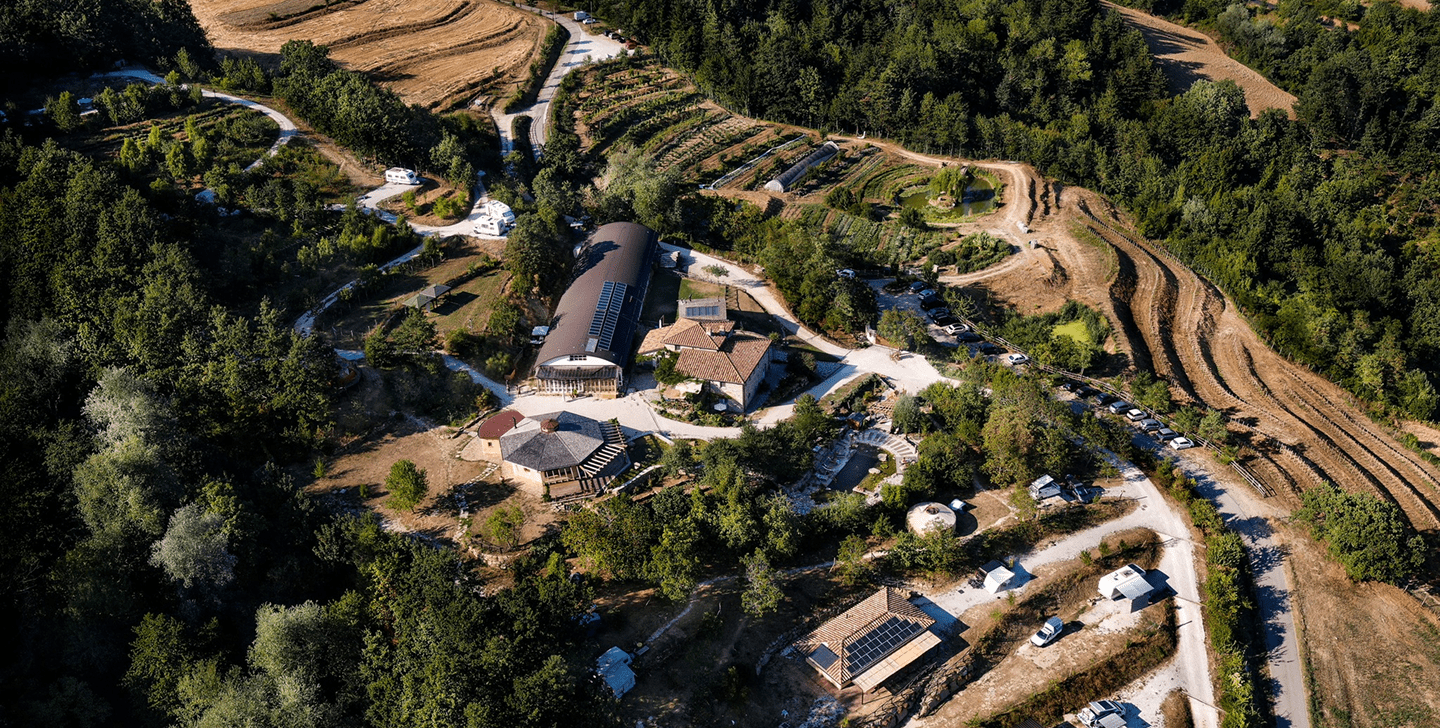
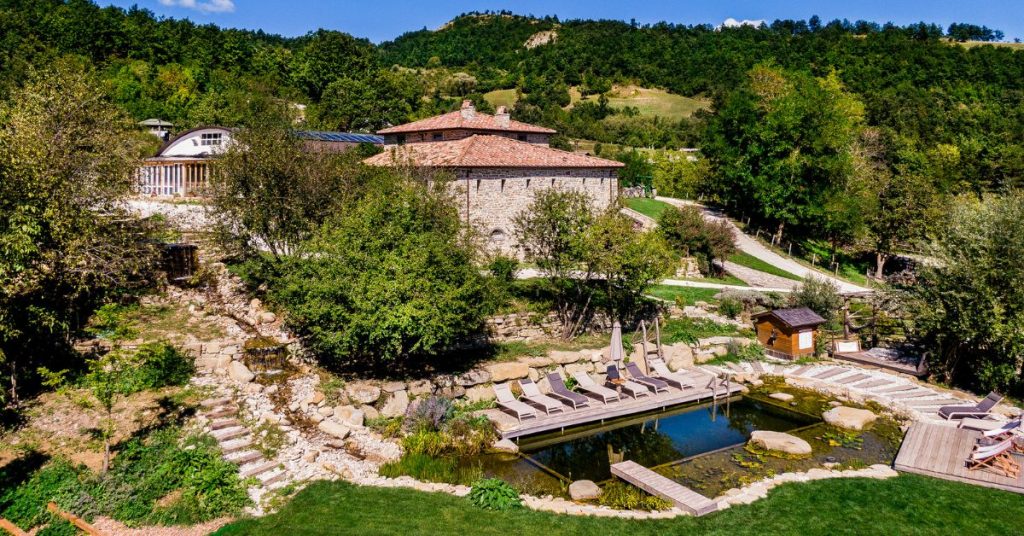
Autosufficienza Farm is already a reality, even if in fact it’s not yet self-sufficient in everything, as I would like. The water we use is from our springs, partly shared with other farmers, our neighbours, through a consortium we created together. Wood heating obviously works with wood from our forest. The fields are mulched with our wood chips and our straw. We try to self-produce seeds and in some months of the year we reach about 80% of self-produced food. We don’t use chemical products in the fields and not even medicines and antibiotics in our bodies. We’re still very behind on the energy part, but every year there are improvements. In these years, in the search for self-sufficiency, I’ve made an enormous amount of mistakes that ultimately I could afford. Perhaps in the future I won’t be able to afford to make mistakes anymore and all the mistakes I’ve made will have served me well.