


Let’s learn to break away from the powers that be and walk the path of resilience, one step at a time.
Ignorance combined with guided disinformation has led the Western population to think that it’s possible to heal from diseases with a pill or a surgical operation. The marketing of the chemical-pharmaceutical industry is so pressing and persuasive that it has convinced the medical profession that it’s possible to heal people by prescribing only pharmaceutical treatments.
The most fitting example of dependency: medicines
Anyone with an open and non-indoctrinated vision can understand the fallacy of this approach: medicines often have the sole purpose of eliminating or alleviating the localised symptom. For example: I have pain in a knee and I take a painkiller. I have a fever and I take an anti-inflammatory. It’s clear that I will no longer feel pain or will no longer have inflammation, but I certainly won’t have resolved the cause that led me to pain or inflammation. The correct assumption from which to start, instead, is that when we perceive illness we are actually already healing. Illness in fact is the response to an imbalance which in some cases could originate in another organ or system compared to the symptom and can only be resolved by bringing the organism back into balance. Eliminating the symptom and doing nothing else is simply stupid. Allopathic medicine is certainly very effective in successfully resolving physical traumas and acute illnesses, but is demonstrating every day more its total failure towards chronic diseases and above all in keeping people healthy. There is a profound difference between a healthy person and a person alive. We are often told life expectancy has increased. But what can we say about healthy life expectancy? For the pharmaceutical industry healthy life is disadvantageous. A healthy person doesn’t bring profits. A dead person doesn’t bring profits. A chronically ill person is a constant flow of money and generates profit for the industry. This is why scientific research hardly orientates itself towards approaches that don’t need doctors and medicines. Which pharmaceutical company would finance a study to heal without medicines?
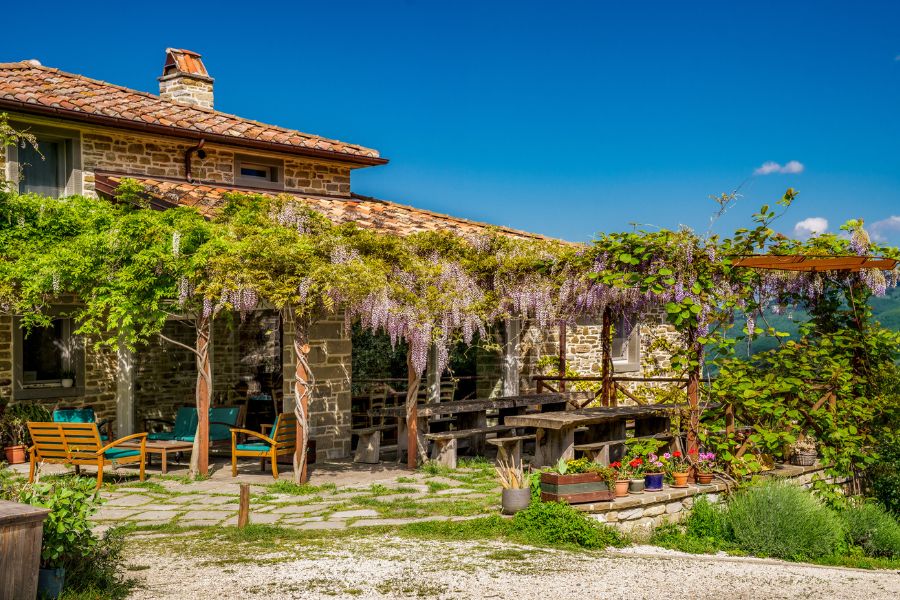
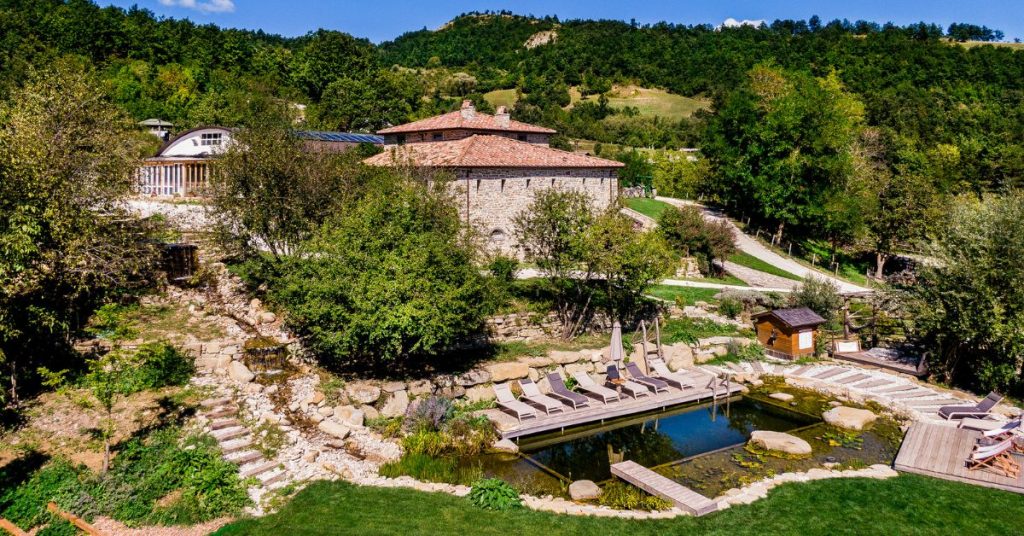
Today at the Farm we drink water from our own springs, eat food grown in our gardens, consume the eggs from our chickens, and enjoy honey from our bees


Self-produced pizza with ancient grain flours at Km0 and sourdough
The marketing of dependency
Everyone wants to create dependency, the doctor seeks faithful patients who return. Pharmaceutical companies seek faithful customers who repurchase the same medicine, ideally for life. This medicine will have side effects foreseen by the pharmaceutical company, which will also have thought of the medicine to manage the side effect and so on. Let’s think for example of the medicine that creates stomach problems for which one then has to take one to protect it, but which has other side effects. This happens in all fields, not only in that of medicine and health. Classic is the example of the computer that shortly after purchase is hit by a virus, for which we are offered to purchase the antivirus. Light bulbs, appliances, cars break in a programmed manner and often there’s no longer the possibility of repairing them: we are told that it’s “better” to buy them new. But better for whom? The various Netflix, Prime, Sky, the apps we download: everything must be constantly renewed and we can no longer think of doing without these services. The entire economic system we live in is designed to create dependency and the more a company makes you dependent the higher its profits will be.
Three days to live or die
In the last century the paradigm of dependency has been constantly growing and today in the West our life depends on a small group of multinational companies whose interest is not our wellbeing, but rather the increase of profits. We depend on a multinational for the water we drink, for the food we eat, for our health, for the energy we consume, for the fuel with which we heat ourselves, for the means by which we move, for the social network with which we converse, for the searches we make, for our entertainment. What would happen if for some reason multinationals from one day to the next ceased to exist? The first to die would be those who depend on medicines. Those who have dependencies such as coffee, cigarettes, psychiatric drugs, drugs would immediately go into serious crisis. Those who don’t have food stocks or don’t self-produce it would find supermarkets empty after three days. Those who receive water thanks to pumps would be dry. Cars would no longer move, heating would be off. Looking closely in the history of humanity we have never been so weak and dependent as today.
The path of resilience
These are just some of the reasons that in 2009 pushed me to found “Autosufficienza Farm”. We should all set ourselves the goal of being more resilient and prepare ourselves to live in a new world, no longer characterised by dependency. Certainly it’s unthinkable to become one hundred per cent self-sufficient, but managing to self-produce a good part of food, energy, household products and learning to self-manage one’s own health can be an excellent starting point. The transition movement teaches us that it’s not necessary to take a step into the void, but it’s sufficient to start walking a new path. Periodically taking a further step towards self-sufficiency and the local economy makes us stronger, more resilient, happier.


Insulation of structures with straw bales
Cultivating hemp can greatly help self-sufficiency; hemp has an almost limitless array of uses that are far more intriguing than its psychoactive properties.
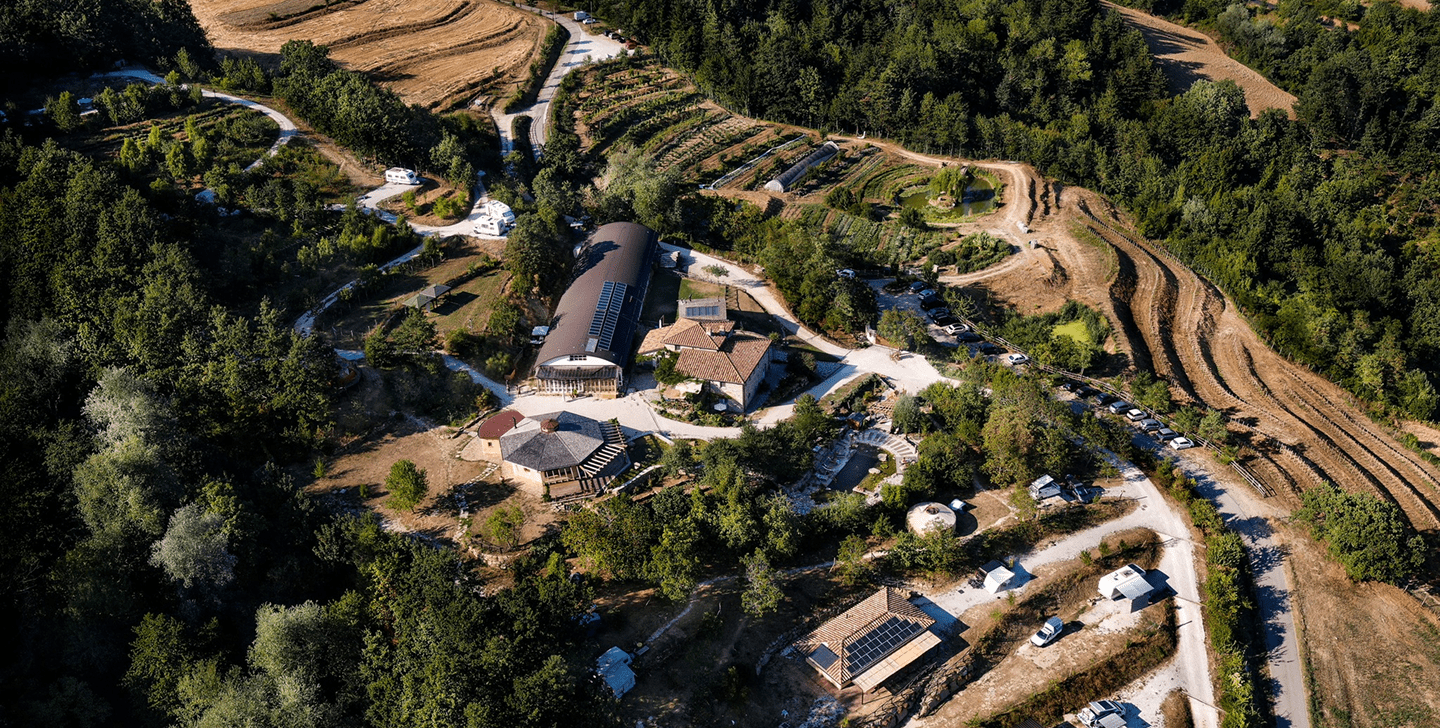
We produce cereals, pulses, fruit, aromatic and medicinal herbs. We heat water with solar panels and wood boilers. Energy-saving buildings need little energy to remain warm and when needed our wood comes to our aid. We have a wood-fired oven built with earth from our vegetable garden in which we cook bread and pizza with ancient grain flour and self-produced sourdough. The development plan we have drawn up will lead us in the next 6 years also to energy self-sufficiency and we have the objective of attracting people with similar values around us, to create together with them a community on an intentional basis. The road to travel to be completely self-sufficient is still long, but having already undertaken the journey makes me happy.
Hemp and self-sufficiency
Growing hemp can be of great help for self-sufficiency. Unlike what multinationals and the powers that be wanted to tell us, hemp has an infinity of uses much more interesting than the narcotic one for which it’s only known by the masses and for this stigmatised. The therapeutic potential of its phyto-complexes is absolutely underestimated: just as an example it’s exceptional for resolving anxiety and stress problems and can be used in pain therapy instead of opiates which create dependency and an infinite series of side effects. With hemp it’s also possible to build cars, walls, cladding and plasters for houses, produce paper, textile products, fuels, oil and food flour, cosmetics. Moreover it’s a plant that in a suitable environment grows very well without fertilisers and pesticides, indeed it’s excellent for cleaning land from weeds as it grows taller and faster than any spontaneous grass. If I managed a chemical-pharmaceutical multinational and aimed at mere profit, I would do everything to prevent the cultivation of this plant.
Written by Francesco Rosso. This article was featured in the magazine Vivi Consapevole 59, September/November 2019.