
Food and energy self-sufficiency and sustainability in practice until 2050: here’s how to do it
INTERVIEW WITH FRANCESCO ROSSO | DIRECTOR OF MACROLIBRARSI AND FOUNDER OF AUTOSUFFICIENZA FARM
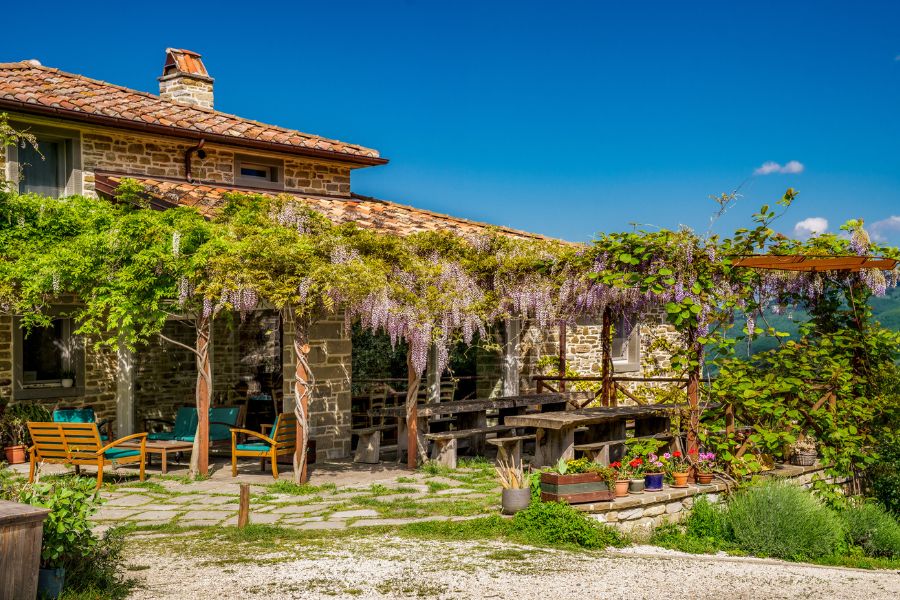
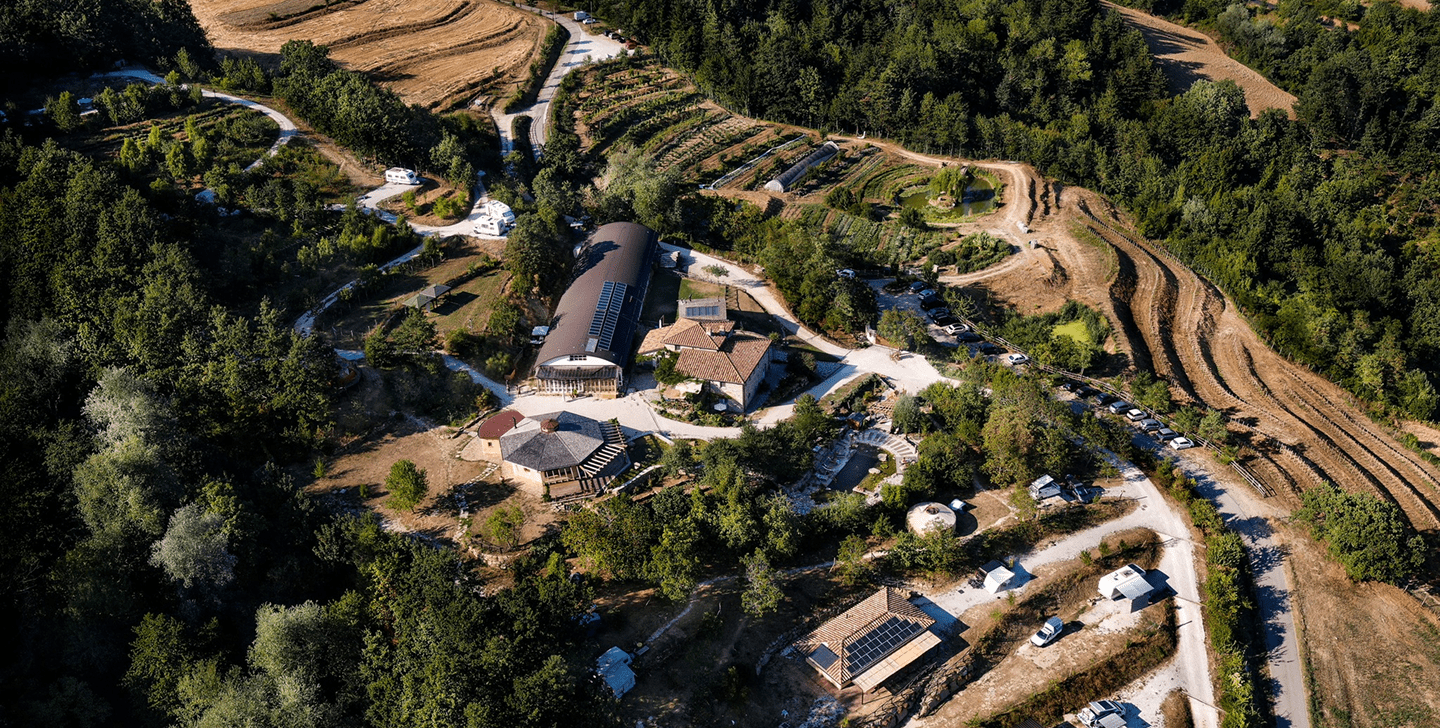
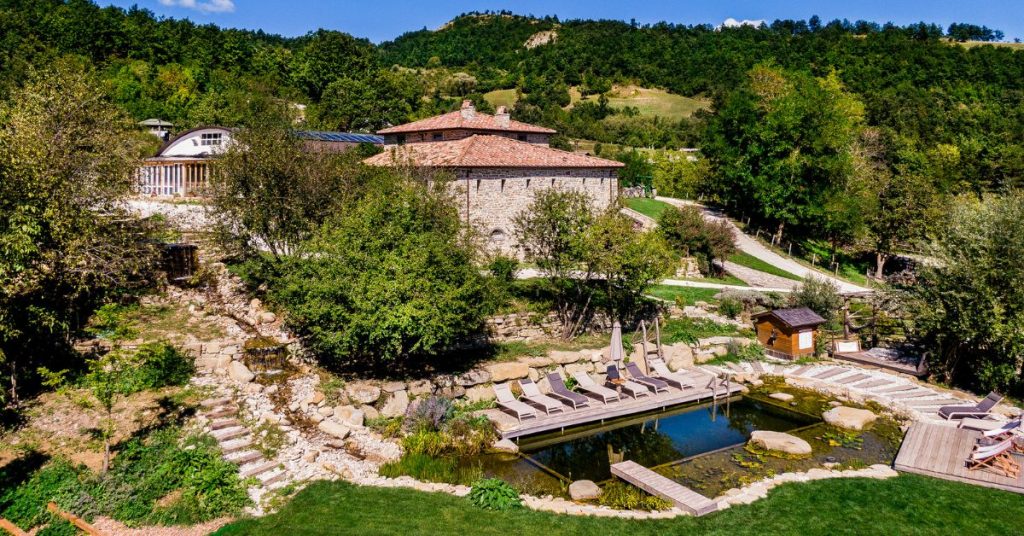
At the end of November 2021 a new documentary was published on Autosufficienza Farm’s YouTube channel showing how the project was born, grew and is evolving. Autosufficienza Farm is a centre for applied ecology, hospitality and training designed in a totally sustainable manner according to the principles of permaculture. It is a place of extraordinary biodiversity and beauty and has been designed to function in a self-sufficient manner from today and for the next seven generations. At the farm you can see first-hand how it is possible to live in harmony and alliance with Nature’s principles and rhythms. Following the publication of the video we received so many questions. Many of you asked us: “But how do you achieve all this?”; but also many objections: “It’s impossible for everyone to start living like this!”. To answer, we passed on your questions to Francesco Rosso, director of Macrolibrarsi, creator and founder of La Fattoria dell’Autosufficienza.
Francesco, the new documentary shows the farm in all its splendour: biodiversity, permaculture, energy and food self-sufficiency. A small group of people who are creating the change they want to see in the world. How was it possible to achieve all this?
Many people ask me this question and unfortunately I don’t have a repeatable recipe. It is almost impossible for a similar project to be repeated with the same initial ingredients, even if it is proof that everything is possible when there is strong focus and perseverance. In 2009 as a family we purchased 70 hectares of abandoned land with dilapidated ruins. Having completed the purchase investment we had exhausted 100% of the economic-financial resources we possessed at that time. I hoped to be able to carry out the first renovations thanks to public aid, unfortunately for nine years there was nothing accessible. I soon realised that I would have to grow the project initially with little financial funds and above all despite my great inexperience. At that time I was 24 years old, with no skills and knowledge in agriculture and even less in construction. So we started with small steps, purchasing only the essential equipment, using makeshift structures such as a yurt and prefabricated wooden cabins. As the project grew, as I acquired knowledge and experience, financial possibilities also grew thanks to Macrolibrarsi, the company I was running – and still run today – in parallel and which allowed the first major renovation to be financed, which began only five years after the initial purchase.
Without Macrolibrarsi’s financial help would it therefore not have been possible to carry out the project?
I think the project would have gone ahead in other ways. The renovation would perhaps have been slower, but funding would have arrived in different forms anyway: other partners who would have participated in the project, public funding, crowdfunding… who knows. Many people think that to create structures of this type great liquidity or in any case collateral assets are necessarily required, but in actual fact very few projects are born with these conditions. By this I don’t mean to say that money isn’t needed or wasn’t needed to carry out the farm project, but that when the project is valid and there are people ready to commit themselves to carrying it out, money arrives one way or another. There are many examples in this regard – italiachecambia.org collects stories of this type: many people and groups have created a reality similar to ours and almost all started with very little money in the bank, but with a very clear dream in their hearts.


Would you recommend everyone to undertake a path similar to yours?
Not everyone. The motivation must be truly high. It is necessary to love what you are going to do, because the initial difficulties are enormous – and they are not only economic, as many believe. Today so many people want to create a self-sufficient farm because they are escaping from a chilling social reality they experience in the city. Recovering ruins and abandoned land is extremely demanding, it is a life project. Before embarking on an adventure of this type one should ask oneself: “If economic, social, environmental circumstances had not changed… is this the path I would have undertaken anyway?”. If the answer is no, you will very probably fail.
The farm presents itself as a model to follow. Isn’t it unthinkable that 8 billion people should undertake a similar path? There certainly isn’t enough land for everyone…
Without entering into the controversial topic of how many people should live on Earth, today Italy is still full of abandoned land and ruins in every region. When every patch of land has been transformed into a productive paradise of organic food, then we will address the problem. Today those who wave about the lack of land only do so as an excuse to maintain the status quo.
Many in the comments on the video ask if it is possible to move to the farm or in any case participate in the project…
Today Autosufficienza Farm is still a production, training and tourist hospitality centre. In these first years we are focused on creating economic-financial self-sufficiency, food and energy self-sufficiency, but also in terms of health and education. We do not currently have accommodation facilities that we can dedicate to residential living, apart from those for people who already live and work on the project. In the coming years we will also create a residential area which we hope can evolve into an ecovillage and complete life model, together with the production centre. However, the conditions are not yet in place, so we are not an ecovillage and it is not possible to move to the farm.
But is it not possible even to have a limited experience?
We are members of WWOOF Italia, an association that connects volunteers and natural rural projects, promoting educational and cultural experiences to contribute to building a sustainable global community. In this way every year we host dozens of volunteers who live the farm together with us for a minimum period of one month and in some cases even for several years.
Are you not thinking of creating other farms or helping others in their creation?
Although we have taken so many steps forward our project is still in a phase of great development. Time is never sufficient to manage to do everything we set ourselves as an objective, unthinkable to be able to dedicate ourselves to other projects as well.
Is there any advice you want to give to those who are about to undertake a rural and self-sufficient life project?
Arm yourself with great patience. Take plenty of time to observe and to plan, but give yourself a deadline by which to start doing. Remember that Nature is not at all kind and never has responsibility for what doesn’t work. Secure a harvest immediately, but also sow for the next seven generations.
WATCH The documentary on Autosufficienza Farm, a Macrolibrarsi.it project macrogo.to/docu-fattoria
This article was featured in the magazine Vivi Consapevole 68 (March/May 2022).