
Permaculture was born in Australia in the ’70s from the insights of Bill Mollison and David Holmgren. Despite the peculiarity of the Australian territory, the principles of Permaculture are so universal that they can be applied anywhere and, above all, there’s no better time than the present to begin. Even in Italy we have countless good reasons to put this system into practice, or rather, this “philosophy of life”, but for now we limit ourselves to giving you 5 which we already consider more than convincing.
1. To preserve agricultural soil

Every day in Italy 70 hectares of soil are “consumed” and the main causes are: the advance of urbanisation which competes with agriculture for land and traditional agricultural activities that lead to phenomena of erosion, loss of organic matter (fertility) and biodiversity, compaction and salinisation of the soil.
Permaculture allows the creation of natural systems and human settlements sustainable over time. It offers an approach to land management in which the functions of animals, plants, people and the earth itself are recognised and integrated to maximise results and create sustainable human environments.
2. To create employment

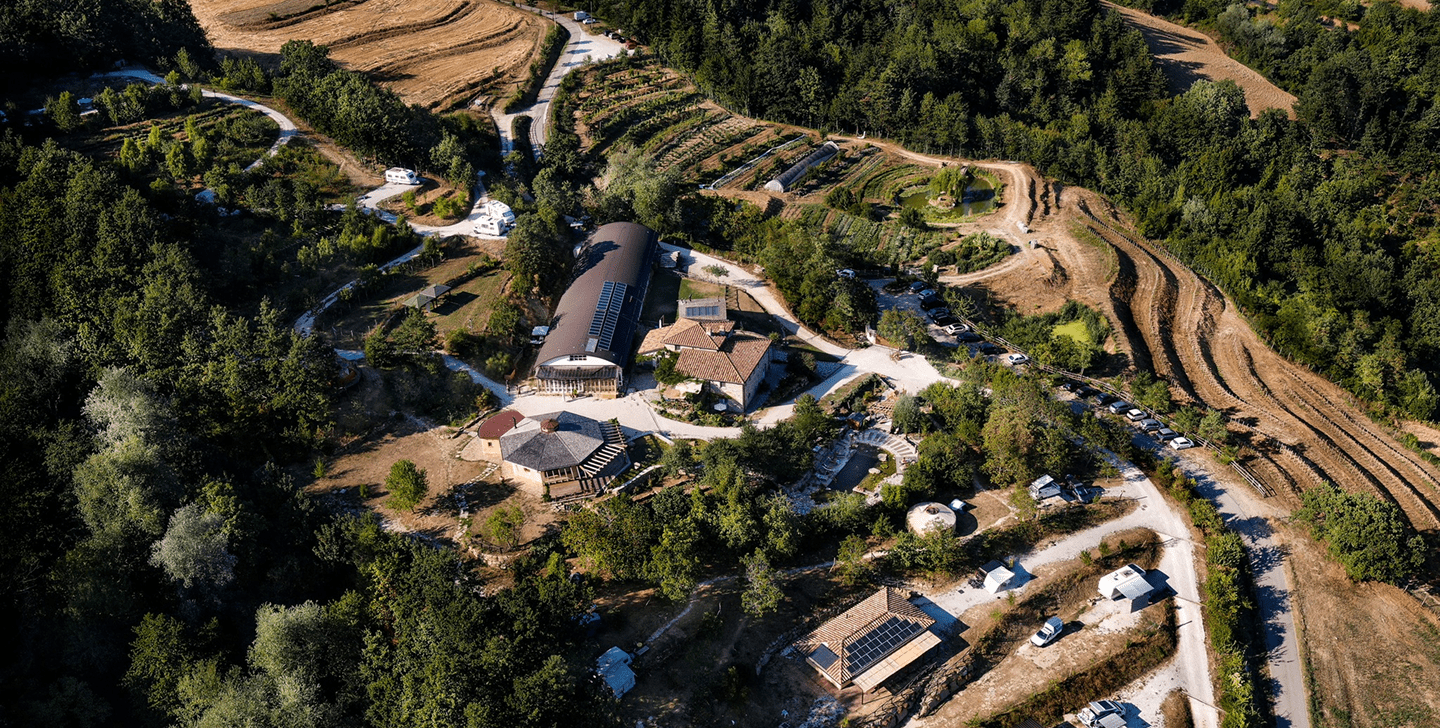
In recent decades many agricultural activities have been abandoned because they are no longer considered profitable and due to the movement of part of the population towards the major population centres. The result is that today, also in light of the economic crisis, we have young generations who have difficulty finding employment and a sector such as agriculture which would have an extreme need to renew itself and create new models of life and consumption. Permaculture can be applied to all human activities and so far has given its maximum expression in the creation of eco-villages. This new form of community could also prove useful to recreate that social aggregation that is being lost and shifting more and more from the physical world to the virtual one.
3. To preserve an agri-food heritage unique in the world

Italy has 7,300 edible plant species and 58,000 animal species (European records). In the United States, the world’s leading producer, wheat crops are only 6… in Italy there are 140! Monocultures are destroying our soil and the selection of “best” species solely based on their productivity or ease of cultivation/harvesting is slowly making native, ancient species selected by man and nature over thousands of years disappear. Permaculture draws strength from biodiversity and soil protection to improve these aspects and receive the greatest possible benefits from them.
4. To reverse the trend towards hydrogeological instability

We all have before our eyes the damage caused by hydrogeological instability in our country. How many times have we seen landslides, flooded fields, overflowing rivers and villages swallowed by mud? Not to mention that every time heavy rain occurs, on land cultivated as monoculture a real erosion of our precious soil occurs which with water pours into rivers and canals until it reaches the sea as quickly as possible. In permaculture the management of resources is fundamental, first of all land and water, but with minimal need for maintenance work. Swales (contour ditches) are dug along contour lines, allowing water absorption of up to 80%. In this way soil moisture is maintained for long periods to be used by plants and trees. The benefits are considerable: from saving water needed for irrigation to designing agricultural land that is more sustainable and capable of coping even with adverse climatic conditions.
5. To be freer

The ethics and principles proposed by permaculture embrace different areas and touch different aspects of life: land and resource management, self-production, renewable energies, education, health etc. Producing one’s own food means being freer from the purchase of food products (often not organic and coming from foreign countries), therefore at the same time less dependent on money and salaried work. Producing one’s own energy, even if only in part, means being freer from the energy market (constantly subject to crises) and indirectly not contributing to wars for the control of oil or other energy resources. We live in a wonderful country and we have the possibility to exploit renewable energies of different natures much more than other states, yet we continue to import oil and gas from abroad. Finally to be free to choose an ethical alternative of life, to provide for one’s needs in a more conscious and sustainable way and to create the foundations for a future in which man and nature are both protagonists and not antagonists.