
At Autosufficienza Farm the experience of surrounding nature combines with the ecology of the accommodation facility, for a 360° green holiday
The paternity of the term “ecotourism” is attributed to the Mexican architect Hector Ceballos-Lascurain, author of numerous publications on the subject. In 1988 he coined the following definition of ecotourism: “Travelling in relatively undisturbed or uncontaminated natural areas with the specific objective of studying, admiring and appreciating the scenery, its plants and wild animals, as well as any existing cultural manifestation (past and present) of the destination areas”.
Based on this definition, generally one talks about ecotourism usually referring to the following activities:
- trekking and routes within natural territories, parks, equipped and non-equipped paths;
- horse riding and long-distance itineraries;
- birdwatching;
- wildlife itineraries within natural parks and protected areas, terrestrial and marine;
- guided dives in marine protected areas for the study and observation of marine biodiversity;
- archaeological itineraries outside urban areas and archaeological survey;
- food and wine and slow food itineraries in rural areas or inhabited areas within protected zones and natural parks;
- educational activities aimed at enhancing and illustrating the territory (characteristics, evolution, biodiversity) and cultures (demo-ethno-anthropological heritage, ecological memories, traditional economies);
- walking or cycling itineraries on specially designed long-distance road directives, of ecological, cultural or religious interest, for example the Via Francigena routes.
Even participating in institutional meetings and development plans on the subject, it’s difficult to deviate from the above-mentioned activities.
All this for us is fantastic, but not sufficient in 2017 and with the example of Autosufficienza Farm we would like to demonstrate that ecotourism can go much further.
It’s beautiful to spend a day in the middle of nature: a short distance from the farm we have the splendid Casentino Forests Park, Mount Fumaiolo, lakes and rivers.
The ecology of the hosting structure
It’s beautiful to spend a day in the middle of nature: a short distance from the farm we have the splendid Casentino Forests Park, Mount Fumaiolo, lakes, rivers and it would be beautiful if the place where one sleeps or rests could also be an ecotourism attraction.
Unfortunately there are few structures of this type, although fortunately they are increasing. Today in Italy there’s much talk about energy saving and regulations have become much more stringent on new constructions. But what’s the sense of energy saving if it only involves the management aspect of the building, namely energy consumption linked to heating and summer air conditioning of environments, completely neglecting the energy costs of production and disposal of materials used?
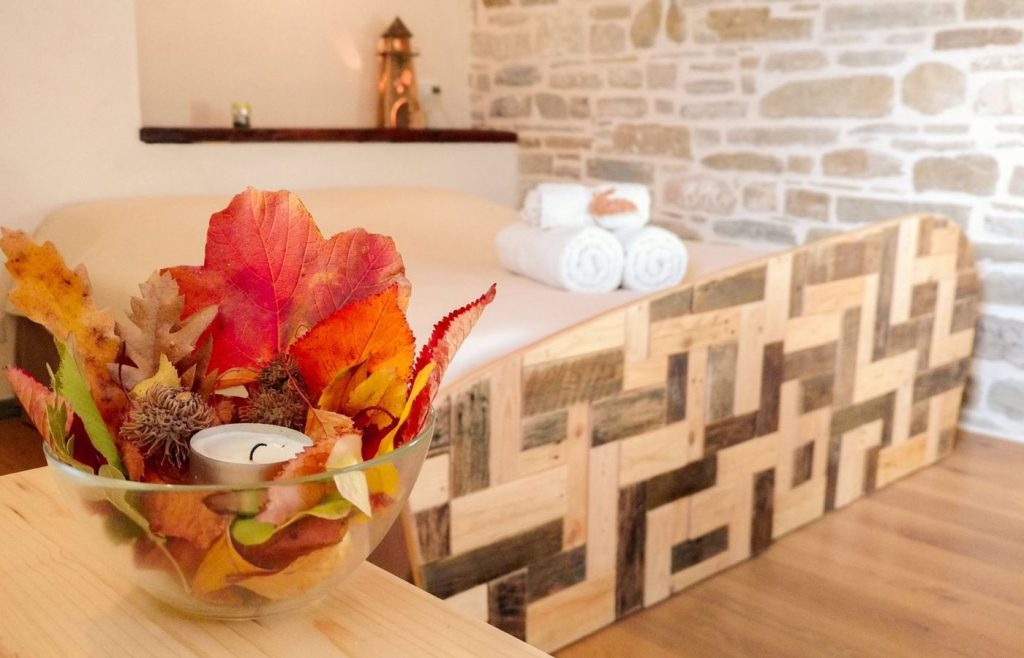
The first renovation done at Autosufficienza Farm awarded us with an A4 class, the maximum energy efficiency provided for by Italian regulations. To obtain this result instead of the classic plastic products, cement, chemical compounds, we used wood, earth, lime, hemp, stone, wood fibre, food-grade paints.
We tried, where possible, not to use angles and straight lines in architectural design, so far from nature, and we tried to evoke natural forms, as in the case of the large thermal mass stove in the shape of a flame.
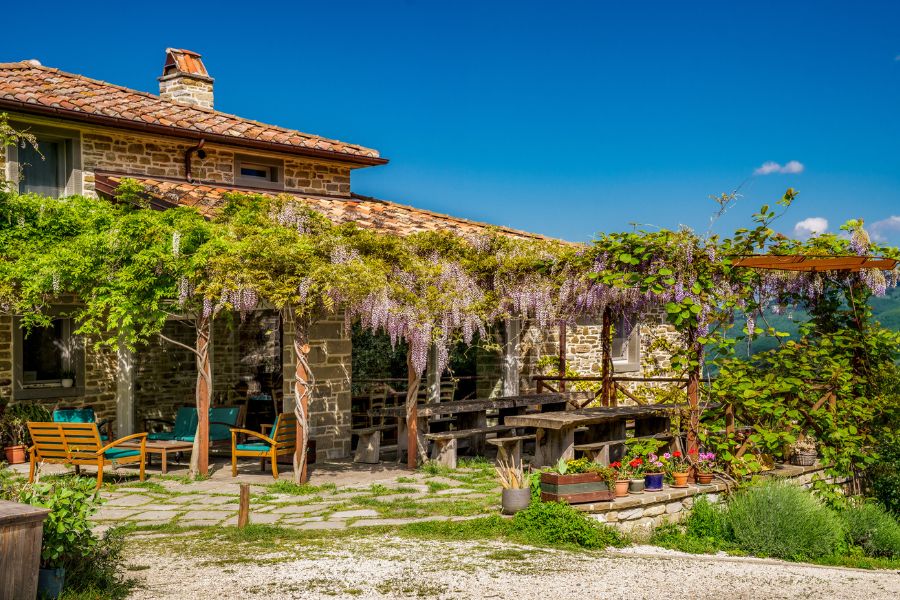
The result is a splendid structure where to stay overnight and where it’s possible to see, touch and breathe natural materials.


The ecology of what we eat
Ecotourism can have a large part also at the table. Even in this case, as for structures, kitchens attentive to ecology are not many, but increasing.
A kitchen suitable for ecotourism should propose local recipes, but what’s the sense if these recipes are then composed with raw materials that have been produced thousands of kilometres away, often destroying nature with chemical fertilisers and pesticides?
In April 2017 we’re counting on opening also the restaurant part of Agritourismo Autosufficienza and the objective is to work only with organic products, km0 and seasonal products, most of which coming from the farm’s crops.
Those who cook will do so with love, because the energy connected to food preparation is as important and nutritious as the quality of the food itself. It will be a healthy kitchen (food medicine): in this way we will also avoid pollution due to medicines, since it’s evident how food has a very great influence on our state of health.
The ecology of the mind
This term most likely doesn’t have a unanimous definition. In this area I would like to treat it as a concept of connection with ourselves and with everything. Surely this is the least treated area by those who talk about ecotourism, although perhaps the most important.
In the middle of nature we have an incredibly superior capacity to reconnect with ourselves. It’s easier for us to learn to act and take responsibility for what happens in our world and think of a way to live existence differently.
That’s why in an ecotourism trip for me the possibility of having a space where to do introspection, meditate, do yoga, hug trees, have ideas for a new way of living that keeps us in tune with ourselves and nature cannot be missing.
On the farm we have already for some time started to organise courses linked to permaculture (method to create human settlements sustainable over time), natural agriculture, shamanism, building with natural materials, holistic disciplines.

The most important thing
A splendid surrounding natural environment, a beautiful natural building structure, a restaurant with healthy and self-produced food, courses in the natural and spiritual field are an excellent setting, but obviously the difference is made by those who welcome you and their energy.
This is the first year in which the farm will become a real accommodation facility and its team will grow to cope with the work deriving from the new organisation. We will select professionally competent people, but above all who are enthusiastic about life, people who want to commit to transmitting their love to others and for the beauty that surrounds us.
The 4 pillars of the project
Food self-sufficiency
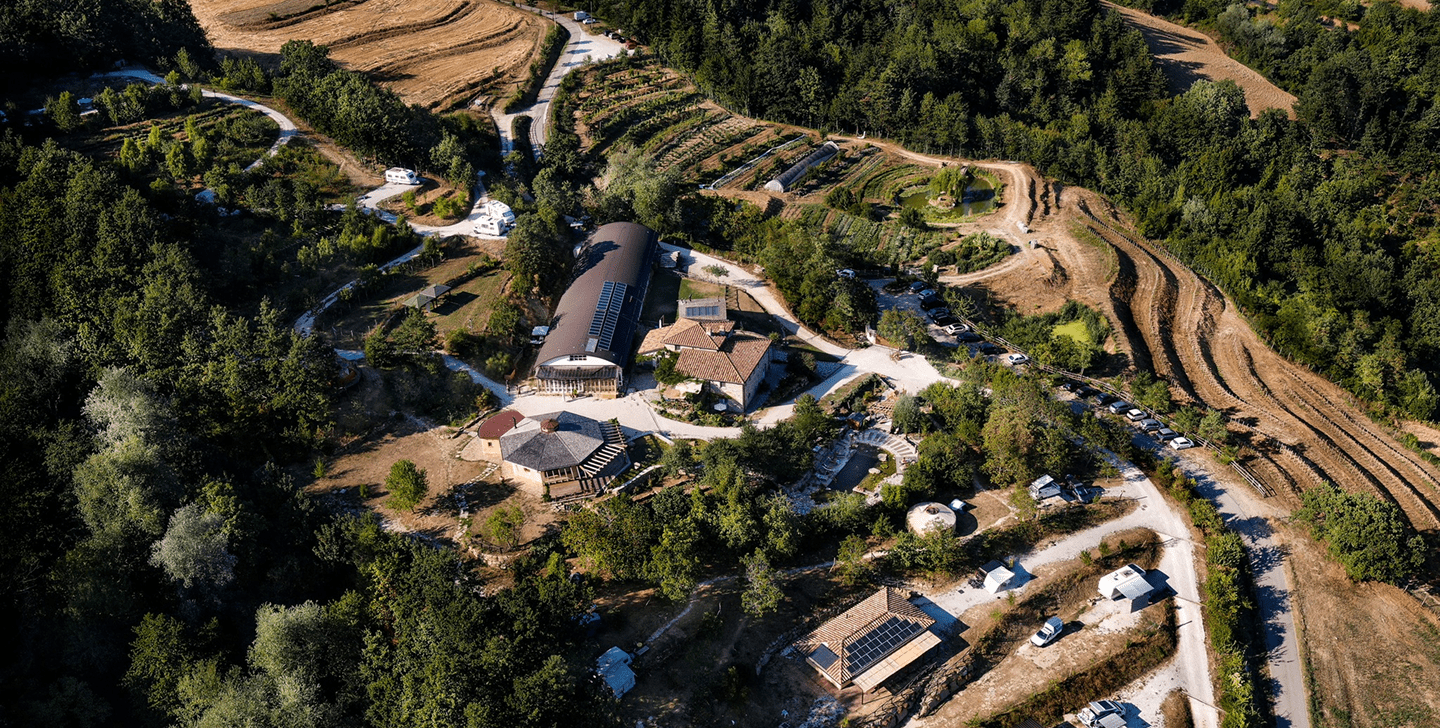
Self-producing most of the food necessary to make “the centre” work using as little fossil fuel as possible and without the use of chemical fertilisers, pesticides or anything else that cannot be reproduced naturally on the farm.
Energy self-sufficiency & natural building
Being independent from the national grid thanks to energy production through sun, water, wind and biomass. Building intelligently and naturally so as to minimise energy consumption and environmental impact and offer hospitality in healthy and comfortable structures.
Ecological and holistic training
Offering a suitable place and important visibility to the best national and international experts to teach how to make a human settlement sustainable, from a small house to an entire city thanks to permaculture, transition towns, happy de-growth, natural agriculture, synergistic agriculture, natural building construction techniques, energy self-sufficiency, holistic techniques, natural cooking…
Ecotourism and health
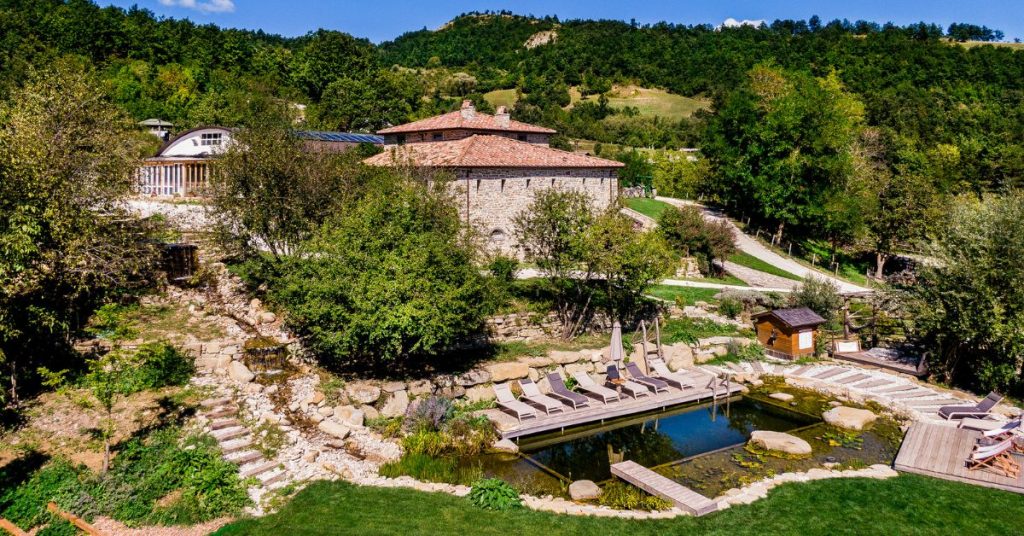
Giving the possibility to sleep in a healthy and natural place, breathe good air, drink spring water, nourish oneself with juices or with organic and natural foods, walk amongst the enchanted woods of the Casentino Forests Park, rest on a hammock at the foot of a large tree, have massages and thermal treatments in Bagno di Romagna, recover the harmony of body, mind and spirit through holistic techniques.
For info and contacts: autosufficienza.dartmoon.dev/wp/