


Gather a vegetable, walk in a forest, taste freshly baked bread: reconnect with the sacredness of nature to reclaim an authentic life beyond consumerism
Tommaso Carmenati | caretaker at the Applied Ecology Centre Autosufficienza
We stand at a crossroads. The direction in which we turn our gaze will also determine the future of humanity.
In a historic moment like this—marked by uncertainty that permeates every sector of society, from economics to health, from water to food, from climate to the environment—launching an exhaustive hunt for a scapegoat would relieve us of responsibility. Blame the multinationals or certain bankers? No one knows. And there’s no certainty we’ll ever find out.
The reality is that any strong power feeds on the daily choices—conscious or unconscious—of individual people. So why not focus attention on what we can improve within ourselves, where we have full power?

From the Sacred to Consumption
Let’s pause for a moment and reflect: our choices actually stem from the degree of balance and integrity that characterises our existence. The gradual distancing from nature—its rhythms, cycles, and seasons—is probably the primary cause of the imbalance that defines the post‑modern individual.
Consider that in most ancestral traditions, many of which have survived the wave of globalization, life was viewed through a “cosmic‑ritual” lens. In these cultures every visible element was a manifestation of the divine. This sense of sacredness profoundly shaped how those societies related to nature.
If we were to analyse the problem of pollution today, for example, we would likely conclude that its root lies precisely in this paradigm shift—a shift that has unfolded over centuries and successive social transformations.
A tree is no longer seen as a manifestation of the divine, but an object from which countless other objects can be derived to satisfy our daily needs.
This consumerist vision, no longer sacred, can be extended to any other sphere of human life: from a piece of wood to a plant, from relationships among people to those with animals.
Imagine if, starting tomorrow, we began to regard everything around us—including our own bodies—as something sacred that deserves the utmost care. The entire society would be transformed.
Autosufficienza: a bridge back to nature
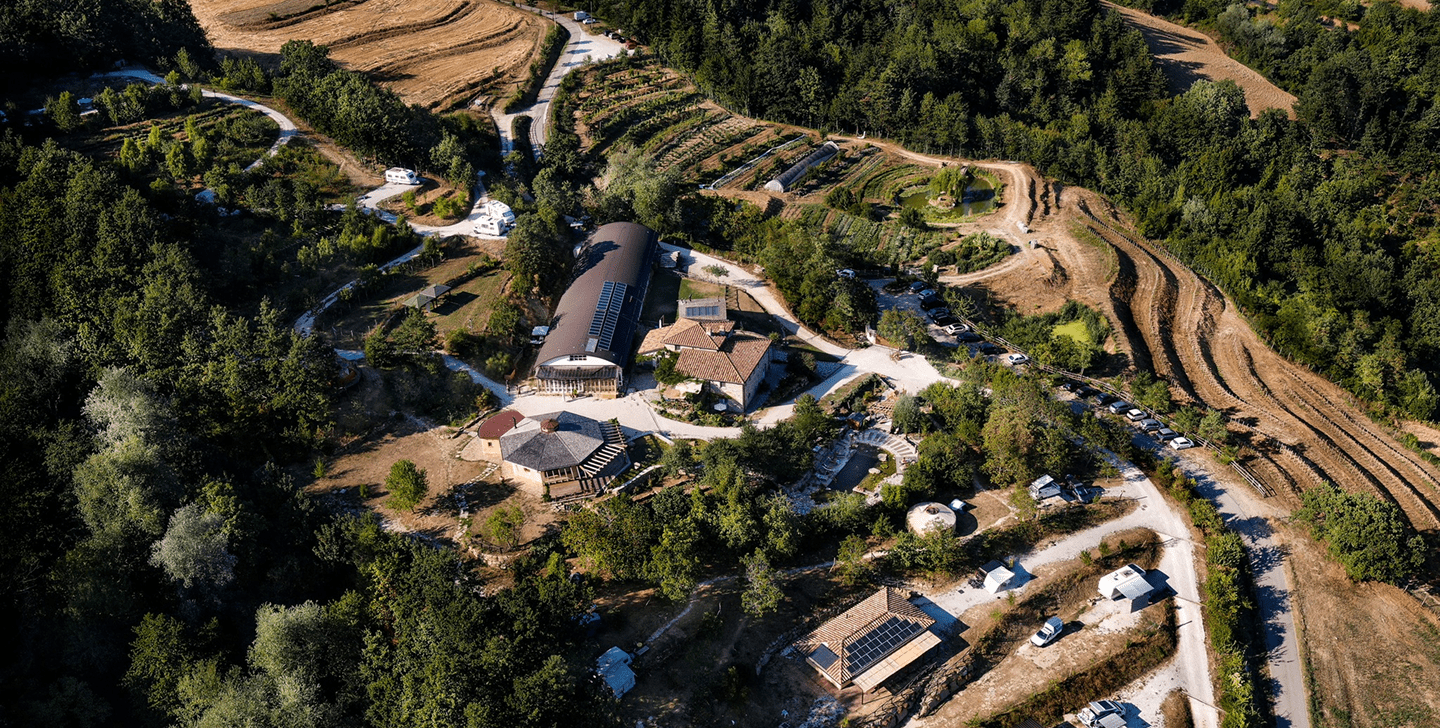
On June 3 2020 my volunteer experience at the Applied Ecology Centre Autosufficienza began. From that moment a series of events unfolded, and I have practically never left. Today I live in this magnificent place, which is also the company I work for and the land where, in a few days, my son will be born.
A few years ago I was looking for a project where I could channel my talents and serve the common good. After a period of nomadism, I chose to put down roots here. I realised that, from many points of view, this place has an astonishing potential for transformation.
Hundreds of pages would be needed to recount everything I have seen here. For now, however, I want to draw attention to a few details that may seem minor at first glance but actually represent an important bridge for bringing us back to nature—a foundation, as mentioned earlier, that is probably the starting point we need to solve the problems we face today as a species and as a society.
The power of the environment
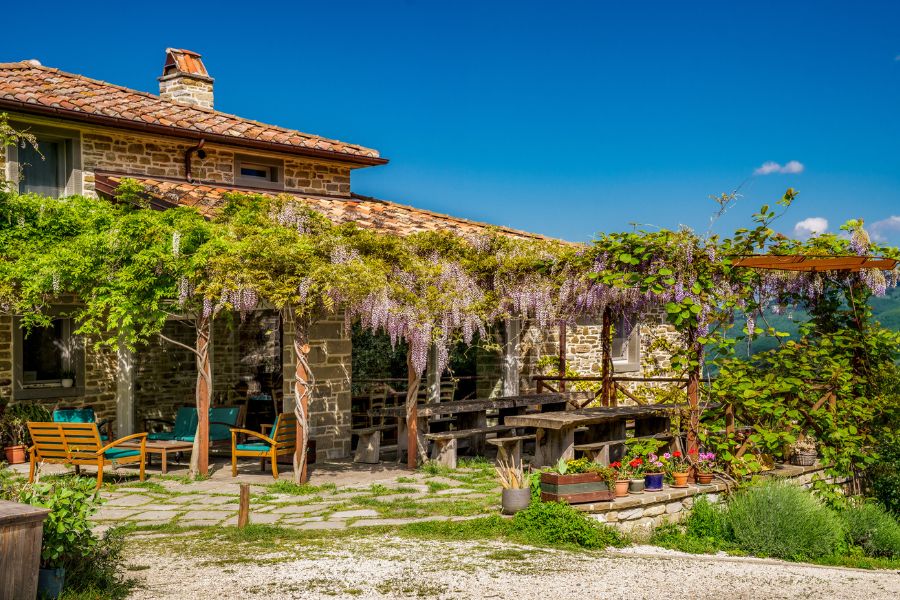
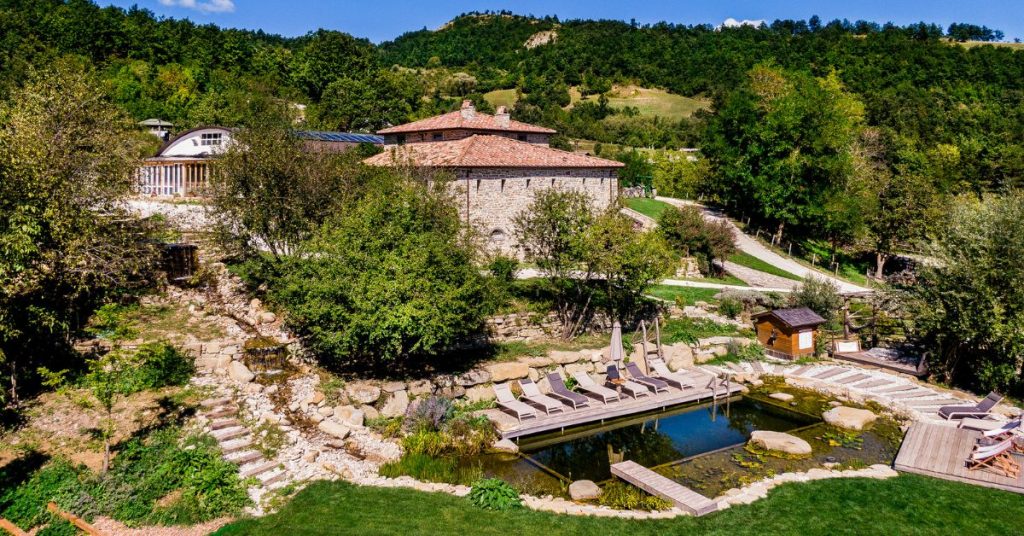
Every structure at Autosufficienza is built with natural materials.
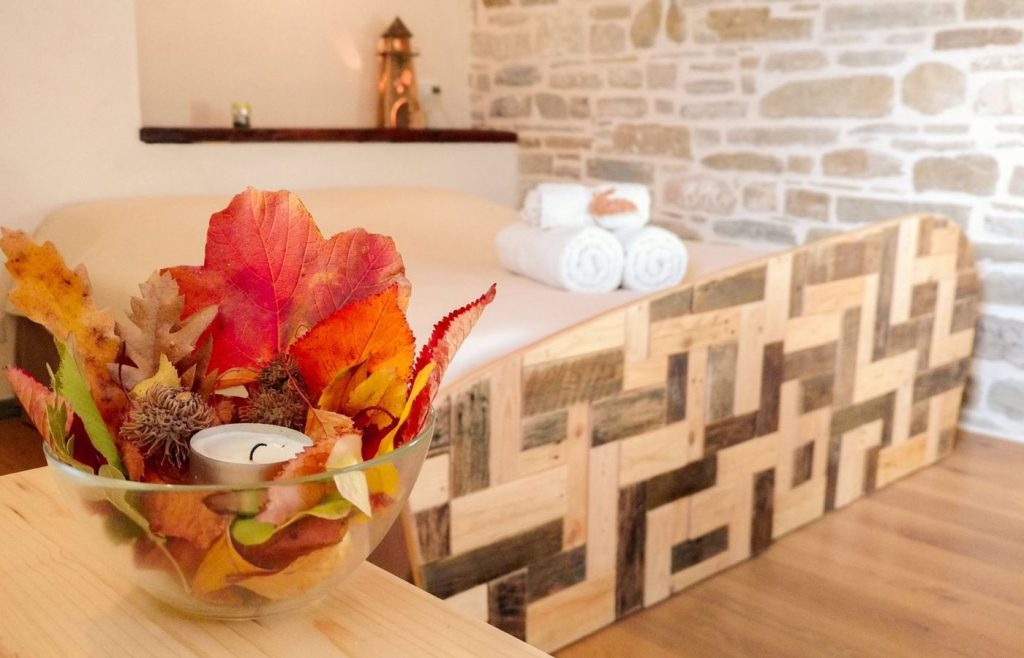
In the octagonal hall, for example, the load‑bearing walls are made of straw bales, a by‑product of the wheat harvested on these very fields. Most of the interior furniture is crafted from wood taken from the surrounding forests. The interior plaster is made of clay.
Entering feels like walking through a forest. The smell, the colours, and the shapes unconsciously bring us back to that sense of infinity that only nature can evoke.
The octagonal shape, the suspended white‑quartz half‑moons indicating the four directions, and the Tao symbol at the centre of the hall reconnect us with the cosmic energies, with the interdependence of sky and earth that characterises our most intrinsic nature.
Let’s pause for a moment on the effect this can have on the thousands of people who come here each year. This atmosphere of nature touches deep inner chords. It awakens a wild, ancestral nature that reminds us who we are and where we come from. It is a fundamental channel for fostering a reconnection with nature, and also a channel for expanding the imagination, which fuels each person’s potential for action: if I think it is only possible to build houses using cement, I will never consider that they could also be built from straw bales.
When I speak about the influence the environment can have on us, I always tell the story of a lady who stayed a year ago in the “Luna Studio Flat,” one of the accommodations at the Autosufficienza agriturismo. Her motivation was simple: to grant herself three days of relaxation in an untouched place like this. She was not interested in the project’s philosophy or the topics covered in our courses.
After returning home, she described a profound discomfort, a sense of frustration and disorientation when faced with the environment she had left behind: the monochromatic colours and sharp angles of the houses, the sterile feel of the urban context, the smog and the noise of city chaos.
She called us to share the strong sense of nostalgia she felt for the days spent here—the birdsong that accompanied the dawn colours, the endless shades of green that coloured the forest, the soft forms and plastered structures that recall nature, and the night sky overflowing with stars.
All of this awakened something in her that had been silent for years. Perhaps, she says, since the moment she was born.

The Power of Food
Most of the population now eats processed foods. How many have ever seen a cow being milked, the source of the milk we drink? How many have witnessed the grinding of a wheat grain that becomes the flour we use to bake bread? How many have ever harvested a vegetable before it reaches their table?
It may seem trivial, but these everyday gestures unequivocally reveal the degree of separation from nature inherent in the post‑modern human.
The cuisine at the Autosufficienza agriturismo, as well as the pizza we bake every Tuesday and Saturday evening, produces a striking effect on those who taste it. A rediscovery of simple flavours, a blend of colours, shapes and aromas that bring us straight back to Mother Earth’s abundance.
The diet prevalent in modern society offers a limited palette of colours and flavours, many of them artificial, that initially appeal only to the eyes while leaving the palate and nutrition indifferent. Not to mention the energy they carry.
In short, it is about returning to Mother Earth’s primordial breath. A few simple actions are enough to remind us who we are and where we come from, giving us a more humane direction to pursue.
This article was featured in the magazine Vivi Consapevole 73 (june/august 2023).